
Table of Contents
- What Is the Difference Between Shopify Subscriptions and One-Time Purchases?
- How Does the Shopify Subscription Model Work?
- Types of Ecommerce Subscription Models
- Benefits of Shopify Subscriptions
- Benefits of One-Time Purchases
- Shopify Subscriptions vs One-Time Purchases Comparison
- Which Products Are Best Suited for Subscriptions?
- Subscription Revenue vs One-Time Purchase Revenue
- Should Your Shopify Store Offer Both Purchase Options?
- How to Set Up Subscriptions on Shopify
- Shopify Subscription Apps and Important Limitations
- How Website Design Influences Subscription Conversions
- How to Reduce Subscription Cancellations
- Digital Marketing Strategies for Both Models
- Real-World Examples and Practical Scenarios
- Important Shopify Subscription Metrics
- Common Mistakes to Avoid
- A 90-Day Plan to Test Shopify Subscriptions
- Frequently Asked Questions
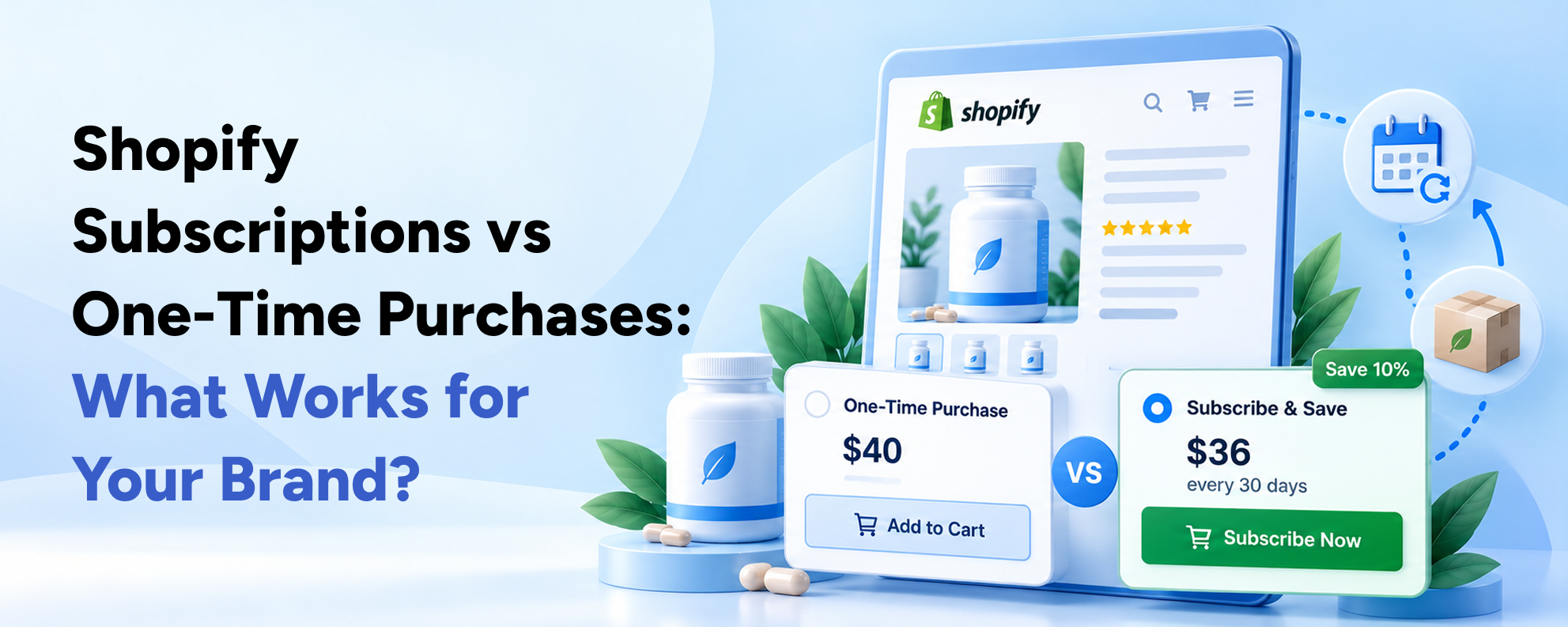
Imagine visiting an online wellness store to buy your favorite nutritional supplement.
You find the product, select the quantity and reach the purchasing options.
Two choices appear:
One-Time Purchase — $40
Subscribe & Save — $36 every 30 days
The first option lets you buy the product whenever you want. The second automatically delivers it at regular intervals while offering a discount.
Which option would you choose?
For customers, the answer depends on convenience, purchasing habits and confidence in the product.
For ecommerce businesses, the decision is more complicated.
Should your Shopify store offer subscriptions, one-time purchases or both? Will recurring orders improve revenue predictability? Could subscription discounts reduce profitability? What happens when customers cancel after their first delivery?
These are important questions for brands planning their ecommerce strategy.
Subscriptions have become a popular option for businesses selling skincare, supplements, coffee, pet products and other regularly consumed items.
However, subscriptions are not suitable for every product or customer.
A furniture retailer, for example, is unlikely to benefit from automatically delivering the same sofa every month. Similarly, customers exploring an unfamiliar skincare product may prefer buying it once before committing to recurring deliveries.
The right business model depends on product demand, customer behavior, operational costs and purchasing frequency.
Shopify allows eligible merchants to offer recurring purchase options alongside traditional one-time purchases, making it possible to serve both customer preferences.
In this guide, we'll compare Shopify subscriptions and one-time purchases, explore their benefits and limitations, examine the financial implications and explain how to implement an effective purchasing experience.
We'll also discuss how Shopify website design, custom development, conversion rate optimization and digital marketing can help businesses evaluate and improve both models.
Quick Answer: Are Shopify Subscriptions Better Than One-Time Purchases?
Shopify subscriptions can be beneficial for products customers purchase regularly, such as coffee, skincare, pet supplies and household essentials. They can make repeat purchasing more convenient and help businesses forecast recurring revenue.
One-time purchases are usually better for products customers buy occasionally, products requiring careful evaluation or purchases where customers prefer flexibility without an ongoing commitment.
For many ecommerce brands, offering both options is the most practical approach.
A hybrid model allows new customers to try products through one-time purchases while giving returning customers the opportunity to subscribe.
However, subscriptions only create sustainable value when customer retention, pricing, fulfillment costs and subscription management are handled effectively.
What Is the Difference Between Shopify Subscriptions and One-Time Purchases?
The main difference is how often customers are charged and how products are purchased.
With a one-time purchase, the customer places an order and pays for that specific transaction.
With a subscription, the customer agrees to receive products or services according to a recurring schedule and applicable billing terms.
Both approaches can generate ecommerce revenue, but they create different purchasing experiences.
What Is a One-Time Purchase?
A one-time purchase is a transaction in which customers buy a product without agreeing to automatic recurring payments.
For example, a customer purchases a pair of running shoes for $90.
The order is processed, the product is delivered and the transaction is complete.
If the customer wants another pair, they must place a new order.
One-time purchases are common across most ecommerce categories.
They give customers control over when and how often they buy.
What Is a Shopify Subscription?
A Shopify subscription allows an eligible merchant to offer products on a recurring billing and delivery schedule.
For example, a coffee brand might offer:
One-Time Purchase — $25
Subscribe & Save — $22.50 every month
A customer selecting the subscription authorizes recurring payments according to the disclosed terms.
The subscription continues until it ends under those terms or the customer takes an available management action.
Shopify's official subscription documentation explains that recurring product purchases can be offered through its first-party Shopify Subscriptions app or compatible third-party applications.
Source: Shopify Subscriptions Documentation.
The Fundamental Business Difference
A one-time purchase model requires customers to make a fresh purchasing decision for each order.
A subscription model establishes a recurring purchasing arrangement.
That difference affects customer acquisition, inventory planning, marketing, payment processing and retention.
However, recurring billing should not be confused with guaranteed recurring revenue.
Customers may cancel, pause orders or experience failed payments.
Businesses must account for those possibilities when forecasting sales.
How Does the Shopify Subscription Model Work?
Shopify subscriptions operate through purchasing plans associated with eligible products.
A merchant selects the products that can be purchased through a subscription and defines available billing or delivery arrangements.
Customers then choose a suitable option during the purchasing journey.
Step 1: The Merchant Creates a Subscription Offer
For example, a skincare brand may sell a moisturizer for $30.
It decides to offer:
- One-Time Purchase: $30
- Monthly Subscription: $27
- Subscription Every Two Months: $27 Per Delivery
The merchant must configure the applicable billing schedule, discounts and product eligibility.
Step 2: The Customer Selects a Purchase Option
On the product page, the customer can compare available purchasing options.
The store should clearly communicate the price, delivery frequency and recurring nature of the subscription.
Step 3: The Customer Completes Checkout
The checkout process displays relevant subscription information.
Supported recurring payment methods are required.
The customer agrees to the applicable purchasing terms before completing the order.
Step 4: Future Orders Are Generated
At the scheduled interval, the subscription system attempts to process the next payment and order according to the configured terms.
The store must have appropriate payment processing, fulfillment and inventory arrangements.
Step 5: The Customer Manages the Subscription
Depending on the application and configuration, customers can access subscription management features such as changing delivery details, skipping orders, pausing or canceling.
Shopify's first-party Subscriptions app provides these controls through supported customer account experiences.
A convenient management process is important for maintaining trust.
Types of Ecommerce Subscription Models
Not every subscription business follows the same approach.
Shopify identifies several subscription models that serve different customer needs.
Understanding these models helps businesses choose a suitable strategy.
1. Replenishment Subscriptions
Replenishment subscriptions automatically deliver products customers consume or replace regularly.
Common examples include:
- Coffee and Tea
- Skincare Products
- Nutritional Supplements
- Pet Food
- Household Cleaning Products
- Personal Care Essentials
The main customer benefit is convenience.
Instead of remembering to reorder a product, customers receive it according to an agreed schedule.
This model works best when customers have reasonably predictable usage patterns.
2. Curated Subscription Boxes
Curated subscriptions deliver a selection of products at regular intervals.
For example, a beauty brand might offer a monthly discovery box containing several products.
Customers pay for convenience, discovery and the experience of receiving something new.
However, curation requires ongoing product selection and careful inventory planning.
Customers may cancel if the products become repetitive or no longer match their preferences.
3. Membership or Access Subscriptions
An access subscription provides benefits rather than simply arranging regular product deliveries.
For example, a retailer might offer a paid membership that includes exclusive products or other meaningful benefits.
This model depends on whether customers consider the ongoing benefits valuable.
Membership programs can require functionality beyond a basic recurring product subscription.
4. Prepaid Subscriptions
Some subscription businesses allow customers to pay in advance for a defined period.
For example, a customer may pay for three months of deliveries upfront.
This can improve cash collection for the business, but it also creates fulfillment obligations covering future periods.
The chosen Shopify application must support the required prepaid structure.
Which Subscription Model Is Best?
The answer depends on the product and customer.
A coffee retailer might benefit from replenishment.
A specialty beauty business may explore curated boxes.
A brand with a strong community may consider membership benefits.
Before choosing a model, identify why customers would want to keep paying.
A recurring payment is not a customer benefit by itself.
Benefits of Shopify Subscriptions
Subscription selling can provide meaningful advantages when it aligns with genuine repeat-purchase demand.
1. More Predictable Revenue
Subscriptions can make revenue forecasting easier.
For example, a retailer with 200 active monthly subscribers paying $30 each has a scheduled recurring billing value of $6,000 per month.
However, this is not guaranteed collected revenue.
Cancellations, payment failures, discounts and changes in active subscriber counts can reduce actual receipts.
The advantage is having a clearer starting point for forecasting future transactions.
2. Convenient Repeat Purchasing
Customers do not need to manually reorder products they use regularly.
For example, someone purchasing a monthly supply of coffee may prefer scheduled deliveries.
Removing repetitive shopping tasks can improve convenience.
However, delivery frequency should match actual consumption.
Sending products too frequently can create unwanted stock and customer frustration.
3. Opportunities to Improve Customer Retention
Subscriptions create an ongoing relationship between the business and customer.
This gives brands opportunities to provide support, relevant product information and appropriate purchasing flexibility.
However, recurring payments alone do not guarantee loyalty.
Customers remain subscribed when the product continues to deliver value.
4. Better Inventory Planning
Predictable delivery schedules can help merchants forecast demand.
For example, a store may estimate the quantities needed for its upcoming subscription orders.
This information can support purchasing and warehouse planning.
However, retailers should still account for cancellations, seasonal patterns and payment failures.
5. Additional Cross-Selling Opportunities
Subscription customers may be interested in related products.
For example, a customer receiving coffee every month may also purchase filters, cups or equipment.
These suggestions should remain relevant.
Cross-selling works best when it helps customers solve an actual need.
6. Potential Customer Lifetime Value Growth
A subscriber who remains active across several billing cycles may generate more revenue than a customer who makes only one purchase.
However, customer lifetime value also depends on profit margins, fulfillment costs, discounts and acquisition expenses.
Businesses must measure retained contribution rather than simply count recurring orders.
Expert Insight
Trey Lockerbie, cofounder of Better Booch, explained the operational value of subscriptions in a Shopify-published business model guide:
“The more subscriptions we have, the better we can plan.”
This reflects one of the most practical benefits of recurring commerce: improved visibility into expected future demand.
Source: Shopify Subscription Business Model Guide.
Benefits of One-Time Purchases
Although subscriptions attract considerable attention, one-time purchases remain essential for most ecommerce businesses.
1. Lower Commitment for New Customers
A customer buying from an unfamiliar brand may want to test the product first.
One-time purchasing removes the concern of agreeing to future automatic charges.
For example, a customer considering a premium nutritional supplement may prefer trying one package before subscribing.
This flexibility can be important for customer acquisition.
2. Suitable for Occasional Purchases
Some products are purchased only when customers need them.
Examples include furniture, gifts, seasonal apparel and many electronics.
These categories do not necessarily fit a recurring delivery model.
Trying to introduce subscriptions without a clear recurring need can create unnecessary complexity.
3. Greater Customer Control
One-time purchases allow customers to decide when to reorder and how much to spend.
They can change products, try different brands or pause purchasing without managing a subscription.
This can be particularly important for price-sensitive customers.
4. Simpler Operational Requirements
Traditional purchases generally involve a single order and payment.
A retailer does not need to maintain ongoing subscription contracts or recurring billing schedules.
This can simplify store administration, payment management and customer support.
5. No Need for Subscription Discounts
Businesses sometimes offer discounts to encourage subscriptions.
With one-time purchases, merchants can sell at their standard price without introducing a recurring-purchase incentive.
This may help protect per-order margins.
However, one-time sales still involve acquisition, payment and fulfillment expenses.
6. Flexibility for Promotional Campaigns
One-time purchases work well with product launches, seasonal collections and limited-time offers.
A fashion brand may run a campaign for a new collection without expecting customers to purchase the same products every month.
This allows marketing teams to adapt offers to different shopping occasions.
Shopify Subscriptions vs One-Time Purchases Comparison
The following table summarizes the main differences.
| Feature | Shopify Subscriptions | One-Time Purchases |
|---|---|---|
| Payment Structure | Recurring according to agreed schedule | Single transaction |
| Revenue Forecasting | More visibility into scheduled orders | Depends on future purchases |
| Customer Commitment | Ongoing until ended | No recurring commitment |
| Best Product Types | Regularly consumed or replenished products | Occasional and varied purchases |
| Customer Convenience | Automatic repeat orders | Complete purchasing flexibility |
| Discounts | Often used as an incentive | Optional |
| Operational Requirements | Recurring billing and subscription management | Standard order management |
| Customer Retention | Ongoing arrangement | Requires additional repeat-purchase effort |
| Main Risk | Churn, payment failures and subscription fatigue | Inconsistent repeat purchasing |
| Key Metrics | Subscriber retention, churn and recurring revenue | Conversion rate, AOV and repeat purchases |
| Suitable for New Customers | Depends on customer confidence | Often a lower-commitment first purchase |
Which Model Generates More Revenue?
Neither model automatically generates more revenue.
A subscription business may receive frequent payments from active subscribers but also offer ongoing discounts.
A one-time purchase business may achieve stronger margins per order but need more repeat marketing to bring customers back.
The correct comparison should consider revenue, acquisition expense, product margins and customer retention over time.
Which Products Are Best Suited for Subscriptions?
Subscription suitability depends on how often customers need a product and whether recurring deliveries provide genuine convenience.
Industry Comparison
| Ecommerce Industry | Subscription Potential | Recommended Approach |
|---|---|---|
| Coffee and Tea | High | Replenishment with flexible frequency |
| Skincare | High for regularly used products | One-time and subscribe-and-save |
| Nutritional Supplements | Potentially high | Clear usage information and flexible delivery |
| Pet Food | High | Scheduled replenishment |
| Household Essentials | High | Recurring supply based on consumption |
| Hair Care | Moderate to high | Subscriptions for regularly used products |
| Fashion and Apparel | Product dependent | One-time purchases with selective curated offers |
| Electronics | Usually limited for hardware | One-time products, subscriptions for suitable consumables |
| Furniture | Generally low | One-time purchases |
| Professional Beauty Supplies | High for regularly replenished supplies | Hybrid purchasing options |
Example: Skincare
A moisturizer may be consumed within a predictable period.
Customers who already trust the product might appreciate automatic replenishment.
However, first-time customers may prefer a single purchase.
A hybrid strategy can serve both groups.
Example: Electronics
A laptop is not typically purchased every month.
However, certain accessories or consumables associated with electronics may have recurring demand.
This illustrates why subscription decisions should be made at the product level rather than automatically across an entire store.
Example: Professional Supplies
A professional lash artist may regularly purchase adhesives or other consumables.
Recurring purchasing could reduce the effort required to place repeat orders.
However, technical specifications and product compatibility must remain clear.
Different professionals may require different quantities and purchasing frequencies.
A Simple Product Suitability Checklist
Before introducing subscriptions, answer these questions:
- Do customers need the product regularly?
- Is consumption frequency reasonably predictable?
- Would automatic delivery save customers time?
- Can customers easily adjust quantities or frequency?
- Is the product suitable for recurring fulfillment?
- Can the business maintain acceptable margins?
- Are repeat-purchase customers already demonstrating demand?
If most answers are positive, a subscription test may be worthwhile.
Subscription Revenue vs One-Time Purchase Revenue
Subscriptions can improve revenue predictability, but businesses must evaluate the financial impact carefully.
Let's examine a hypothetical skincare product.
Example: One-Time Purchase vs Subscription
The business sells a moisturizer for $40.
It introduces a subscription with a 10% discount.
Subscription price:
$40 − 10% = $36 per delivery.
Assume the following variable costs per order:
| Item | One-Time Purchase | Subscription Order |
|---|---|---|
| Selling Price | $40.00 | $36.00 |
| Product Cost | $15.00 | $15.00 |
| Fulfillment and Shipping Cost | $5.00 | $5.00 |
| Payment Processing Allowance | $1.50 | $1.50 |
| Contribution Per Order | $18.50 | $14.50 |
These figures are illustrative and exclude acquisition costs, platform fees, returns and other overheads.
What Happens After Three Deliveries?
Suppose a one-time customer purchases once.
The business earns $18.50 in contribution before other expenses.
If a subscription customer successfully completes three deliveries, the combined contribution would be:
$14.50 × 3 = $43.50.
However, the subscription customer must remain active and successfully pay for all three orders.
A one-time customer might also return and make additional purchases.
Therefore, the difference should not be interpreted as guaranteed incremental profit.
A Key Financial Lesson
Subscriptions can produce lower contribution per individual order because of discounts.
Their value comes from the possibility of additional retained orders and more predictable purchasing.
Businesses need enough retention to compensate for discounts, fulfillment expenses and subscription operating costs.
Understanding the Break-Even Point
Using this example, a customer completing two subscription orders generates:
$14.50 × 2 = $29.00 in contribution.
That exceeds the contribution from one one-time purchase.
However, if the customer would otherwise have purchased twice at the full $40 price, the one-time model would have generated $37.00 in contribution.
This illustrates why businesses must compare actual customer behavior rather than assuming every subscription order is additional revenue.
Consider Customer Acquisition Cost
Suppose acquiring a new customer costs $20.
A single one-time purchase contributing $18.50 would not recover that acquisition expense immediately.
A subscription customer completing three successful deliveries would generate $43.50 before acquisition expense.
After subtracting the hypothetical $20 acquisition cost, $23.50 remains before overheads and other costs.
This may look attractive, but only if enough customers remain subscribed.
Businesses should calculate these figures using actual performance data.
Should Your Shopify Store Offer Both Purchase Options?
For many ecommerce brands, a hybrid model is worth considering.
A hybrid purchasing model allows customers to choose between a one-time transaction and a subscription.
Shopify supports this structure for eligible products.
Why a Hybrid Strategy Can Work
New customers may want to try a product without committing to recurring payments.
Returning customers may already understand their product consumption and prefer automatic delivery.
Offering both options serves different purchasing intentions.
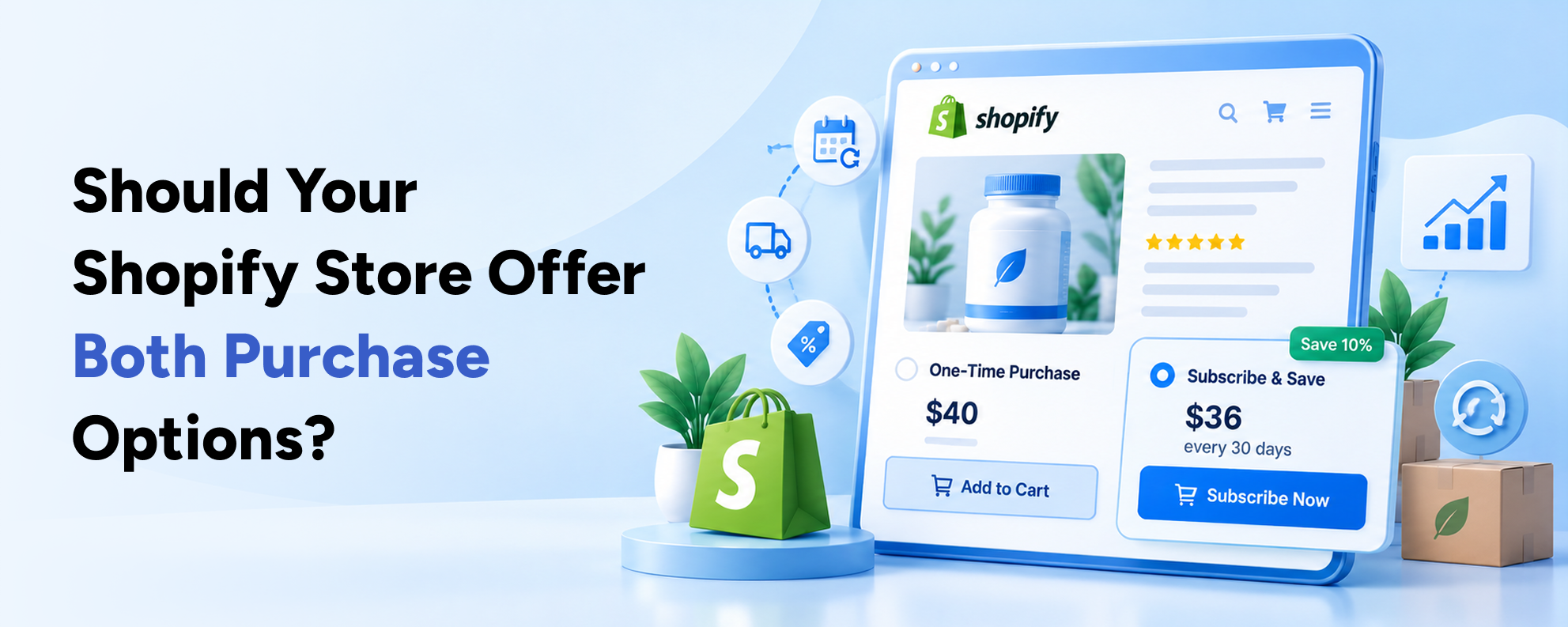
Example of a Hybrid Product Page
A skincare product could display:
Purchase Option 1: One-Time Purchase
$40
Buy once with no recurring payment.
Purchase Option 2: Subscribe & Save
$36 per delivery
Save 10% with scheduled deliveries every 30 or 60 days.
Manage or cancel according to the disclosed subscription terms.
This presentation makes the difference clear.
Should the Subscription Be Selected by Default?
There is no universal answer.
A store should avoid causing customers to unintentionally agree to recurring charges.
The purchase selection must be clear, accessible and consistent with applicable laws.
For many businesses, showing both options without obscuring the one-time alternative is a sensible starting point.
Then test how customers respond to the layout.
Why Customer Choice Matters
Some shoppers are confident enough to subscribe immediately.
Others need more experience with the product.
Requiring everyone to subscribe may create unnecessary barriers.
Similarly, hiding subscriptions entirely can mean missing demand from customers who would appreciate automatic deliveries.
The objective is to match purchasing options to customer preferences.
How to Set Up Subscriptions on Shopify
Shopify provides a first-party subscription application and supports compatible third-party subscription solutions.
A basic setup can be completed through the Shopify admin, provided the store meets the applicable requirements.
Step 1: Review Product Suitability
Start by identifying products with consistent repeat-purchase demand.
Analyze available order history and customer purchasing frequency.
Avoid introducing subscriptions across every product without evidence of demand.
Step 2: Select a Subscription Application
Shopify offers the free first-party Shopify Subscriptions app.
It supports recurring purchase plans and customer management features.
More specialized business requirements may require another compatible application or custom development.
Step 3: Install and Configure the Application
Install the application from the Shopify App Store.
Review the required settings and available purchasing options.
Check payment gateway eligibility before proceeding.
Step 4: Create Subscription Plans
In the Shopify Subscriptions app, create the relevant purchasing plans.
A plan may include:
- Product Selection
- Subscription Price or Discount
- Delivery Frequency
- Billing Schedule
- Applicable Subscription Conditions
For example, a coffee retailer might offer deliveries every two or four weeks.
The selected frequency should reflect typical consumption.
Step 5: Enable One-Time Purchasing if Appropriate
Shopify allows eligible products to support both one-time and subscription purchases.
In the product settings, review the purchase options configuration.
A subscription-only product can be configured, but this may restrict supported sales channels.
For most hybrid models, retain the one-time purchasing option.
Step 6: Display the Subscription Widget
Add the subscription purchasing widget to the appropriate product page.
Theme compatibility matters.
Shopify's documentation explains that some themes require specific configuration for subscription widgets and blocks.
Test the purchasing controls on desktop and mobile.
Step 7: Configure Subscription Policies
Clearly explain recurring charges, delivery schedules, cancellation conditions and customer responsibilities.
Shopify adds a purchase-options cancellation policy area that merchants should review and complete.
Do not leave important customer-facing terms unclear.
Step 8: Test the Complete Purchase Journey
Before launch, test:
- One-Time Purchase Selection
- Subscription Plan Selection
- Product Pricing
- Discounts
- Checkout Summary
- Payment Methods
- Shipping Charges
- Confirmation Messages
- Subscription Management
- Cancellation and Skipping Options
Use an appropriate testing process for the store's live payment configuration.
Official setup reference: Shopify Subscriptions Setup Guide.
Shopify Subscription Apps and Important Limitations
Not every subscription requirement is supported by the same application.
Businesses should evaluate technical requirements before choosing a solution.
Shopify's First-Party Subscriptions App
The Shopify Subscriptions app supports recurring billing plans, subscription management and relevant customer notifications.
According to Shopify's current documentation, customers can manage subscriptions through supported account features.
This includes reviewing orders, changing eligible details and pausing or canceling subscriptions.
Third-Party Subscription Applications
More specialized subscription experiences may require third-party tools.
For example, a business may need advanced curation workflows, specific analytics or complex subscription configurations.
Third-party applications can introduce additional subscription fees, transaction charges or integration requirements.
Evaluate total costs before selecting a provider.
Payment Gateway Compatibility
Recurring billing requires a supported payment gateway and compatible payment method.
Shopify's documentation currently lists Shopify Payments, PayPal Express, Authorize.net, Adyen and Stripe as supported gateways, subject to regional and other restrictions.
Not every payment method available for one-time checkout is necessarily available for subscriptions.
For example, some local and manual payment methods may not support recurring billing.
Product Bundle Compatibility
Shopify's official documentation states that Shopify Bundles is not compatible with the first-party Shopify Subscriptions app.
This is particularly important for brands planning recurring product kits or customizable bundles.
A more specialized solution may be necessary.
Sales Channel Limitations
Subscription product availability varies across sales channels.
Shopify supports subscriptions through specified channels, but subscription-only products have additional restrictions.
Businesses should verify channel support before planning a subscription-based expansion.
Customer Account and Theme Requirements
A functioning subscription experience involves more than enabling recurring payments.
Customers need to understand their choices and access the controls relevant to their subscription.
The theme must support clear subscription presentation and appropriate account functionality.
For stores requiring more complex purchasing experiences, professional Shopify development may be appropriate.
Official reference: Shopify Subscription Considerations.
How Website Design Influences Subscription Conversions
Subscription success depends partly on how clearly customers understand the purchasing options.
A technically functional subscription app does not guarantee a good user experience.
Poorly designed product pages may create confusion about pricing, delivery frequency or cancellation.
1. Make Purchase Options Easy to Compare
Use clear labels such as:
One-Time Purchase
Subscribe & Save
Place the relevant prices close to their corresponding options.
Customers should not need to scroll through lengthy text to understand the difference.
2. Explain Subscription Discounts Accurately
If a subscription provides a discount, explain how it applies.
For example:
Save 10% on Each Eligible Delivery
Avoid advertising ongoing savings when the discount applies only to the first order.
3. Display Delivery Frequency Clearly
A customer should know whether the subscription renews weekly, monthly or at another interval.
Where available, allow customers to choose a frequency suited to their needs.
4. Make Subscription Controls Accessible
Customers should be able to understand how to manage their subscriptions.
Useful controls may include changing delivery frequency, updating payment details, skipping an order or canceling.
These features help reduce customer frustration.
5. Optimize Mobile Product Pages
Mobile shoppers should be able to compare pricing and select purchasing options without difficulty.
Avoid small radio buttons, unclear labels and overlapping interface components.
Ensure the Add to Cart button reflects the selected purchase type correctly.
6. Explain Shipping and Billing Terms
Customers should understand whether shipping charges apply to each delivery.
The checkout should communicate the recurring purchasing arrangement accurately.
Unclear fees can create distrust.
7. Test Different Layouts
A/B testing may help identify which presentation is easier for customers to understand.
Useful experiments might compare placement, explanatory wording or visual hierarchy.
However, experiments must not mislead users about recurring payment obligations.
If your store receives traffic but struggles to generate purchases, explore our guide on why Shopify visitors may not convert into customers.
How to Reduce Subscription Cancellations
Subscription cancellation, often called churn, is one of the most important challenges in recurring commerce.
Customers may cancel because they no longer need the product, receive deliveries too frequently, find a lower price elsewhere or experience dissatisfaction.
Others may leave because of payment failures rather than a deliberate decision.
Understand Voluntary and Involuntary Churn
Voluntary churn occurs when a customer chooses to cancel.
Involuntary churn occurs when the subscription ends or becomes inactive because of circumstances such as failed payments.
These problems require different responses.
1. Offer Flexible Delivery Intervals
A customer receiving too much product may cancel even when they like the brand.
Allowing suitable delivery frequencies can help the subscription better match product consumption.
2. Make It Easy to Skip an Order
Sometimes customers simply need more time to use their existing supply.
A skip option can be more appropriate than requiring cancellation.
Shopify's first-party Subscriptions app supports skipping upcoming orders.
3. Communicate Before Renewals
Where appropriate and required, send clear reminders about upcoming subscription orders.
These messages can help customers manage delivery schedules and payment details.
Applicable notification and disclosure obligations depend on the relevant market.
4. Improve Product Satisfaction
Subscriptions cannot compensate for poor product quality.
Monitor customer feedback, returns and support inquiries.
If customers consistently complain about product suitability, address the underlying issue rather than relying on retention discounts.
5. Handle Payment Failures
Payment cards expire and transactions fail.
A subscription system should have a reasonable process for retrying eligible payments and informing customers when action is needed.
Shopify allows merchants to configure certain billing retry behaviors in its first-party app.
6. Avoid Making Cancellation Difficult
Complicated cancellation procedures can damage trust and may create legal compliance problems.
Customers should understand how to end recurring payments under the applicable terms.
Shopify's customer account tools provide supported subscription cancellation functionality.
7. Track Cancellation Reasons
Invite customers to provide feedback when they cancel.
For example, distinguish between:
- Too Much Product
- Price Concerns
- Delivery Problems
- Product Dissatisfaction
- Financial Reasons
- Switching to Another Brand
Use this information to identify recurring operational or product issues.
Digital Marketing Strategies for Both Models
Subscription and one-time purchase businesses require different marketing approaches.
However, they can also support each other.
SEO for One-Time Purchases
One-time purchasing campaigns can target product-specific search intent.
For example:
"Buy organic coffee beans online"
"Professional hair straightener"
"Women's running leggings"
Relevant product and collection pages should help customers understand available options.
SEO for Subscriptions
Subscription products may attract different queries.
Examples include:
"Monthly coffee subscription"
"Skincare subscription delivery"
"Subscribe and save pet food"
Create useful content explaining the subscription benefits, pricing and purchasing conditions.
Avoid producing near-identical pages that compete for the same search intent.
Google Ads
Google Ads can help businesses reach shoppers actively searching for relevant products.
The landing page should match the campaign's offer.
If the advertisement promotes a subscription discount, the page must clearly explain the applicable terms.
Meta Ads
Meta campaigns can help introduce products and subscription benefits through visual storytelling.
For example, a skincare brand might demonstrate how its product fits into a routine and explain available delivery options.
However, the messaging should remain accurate and avoid misleading recurring-price claims.
Email Marketing
Email marketing can support different customer journeys.
For one-time buyers, relevant messages may include product education, replenishment reminders and compatible product recommendations.
For subscribers, communications may focus on account management, upcoming orders and useful product guidance.
Retargeting
Businesses can use appropriate remarketing methods to reconnect with interested shoppers.
However, targeting should comply with applicable privacy requirements and platform policies.
A customer who viewed a product but did not purchase may benefit from clearer product information rather than repeated promotional pressure.
Why an Integrated Strategy Matters
Shopify development creates the purchasing functionality.
Website design helps customers understand their options.
SEO and advertising attract relevant shoppers.
Email marketing and customer support help maintain relationships.
Conversion rate optimization brings these areas together through testing and performance analysis.
Basiltech's Shopify CRO and ongoing growth services focus on improving customer journeys through research, testing and measurement.
Real-World Examples and Practical Scenarios
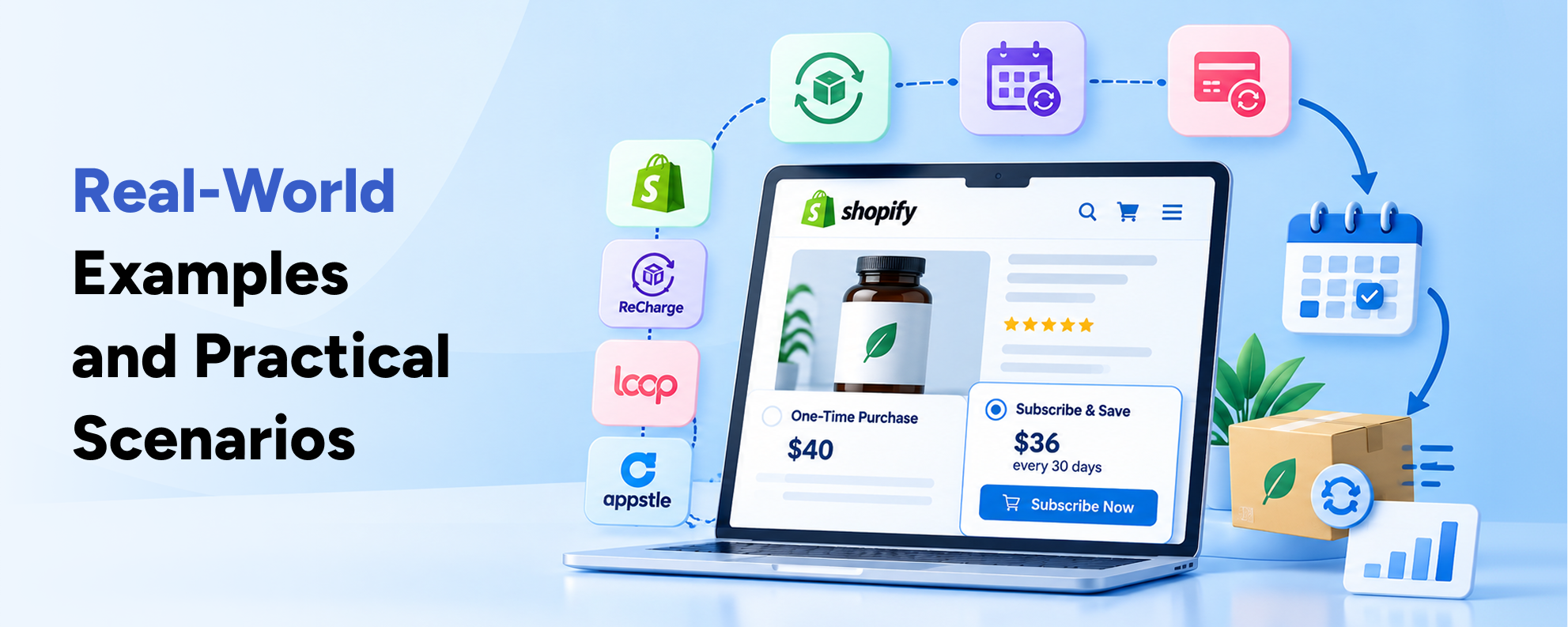
A subscription strategy becomes easier to understand when applied to different business models.
Example 1: Better Booch — Recurring Demand and Planning
Better Booch, a kombucha company, provides an example of how recurring customers can support operational planning.
Shopify's subscription business model coverage includes comments from cofounder Trey Lockerbie about the value of predictable subscriptions.
The main lesson is that recurring demand can help businesses anticipate inventory and fulfillment needs.
However, that benefit still depends on retaining customers and providing products they continue to value.
Source: Shopify Subscription Business Model Guide.
Example 2: From Rachel — Letting Customers Try Before Subscribing
Shopify has featured From Rachel, an apparel subscription business, in its reporting on subscription-based shopping.
The business introduced single-payment purchases after discovering that some customers wanted to try products before committing to a subscription.
This is a useful example of why customer choice matters.
A subscription-first brand may still benefit from an accessible one-time purchasing option.
The lesson is not that every business should copy the model, but that purchasing preferences should be validated through customer behavior.
Source: Shopify Subscription-Based Shopping Examples.
Example 3: Live Ultimate — Subscription Shopping Experience
Live Ultimate is a wellness brand offering nutritional products through its Shopify storefront.
Its purchasing experience includes considerations involving one-time orders, subscription options and product education.
Basiltech's Live Ultimate Shopify case study discusses a proposed optimization strategy focused on clearer product information and more transparent purchasing options.
The case study presents growth targets and planned improvements, not verified subscription revenue increases.
Its relevance here is the UX challenge: customers need to understand what they are buying, how often they will receive it and which option best matches their needs.
Example 4: A Professional Beauty Supply Store
Consider a hypothetical professional lash supply business.
Customers may purchase regularly used products such as adhesives or consumables.
The retailer could evaluate recurring delivery options for suitable products while keeping one-time purchasing available.
However, some products may have specialized storage, usage or shelf-life requirements.
Those considerations should influence whether the products are appropriate for subscriptions.
What These Examples Demonstrate
Subscription success is not determined by the presence of a recurring billing button.
It depends on whether the business offers value customers want to receive repeatedly.
Strong product selection, clear purchasing terms and a reliable shopping experience are more important than subscription complexity.
Important Shopify Subscription Metrics
Businesses should measure subscription performance separately from one-time sales.
The most useful metrics depend on the business model, but several provide a strong starting point.
1. Subscription Conversion Rate
This measures how often relevant store visits result in subscription orders.
For example, a business might track subscription purchasing sessions divided by eligible product page sessions.
The denominator must be clearly defined and used consistently.
2. Subscription Attach Rate
Subscription attach rate measures the share of eligible purchases made through a subscription rather than a one-time purchase.
For example:
200 eligible purchases
50 subscription purchases
Subscription attach rate = 50 ÷ 200 × 100 = 25%
This helps evaluate whether customers are selecting recurring purchasing options.
3. Monthly Recurring Revenue
Monthly recurring revenue, or MRR, represents a normalized monthly value of active recurring subscriptions.
For example:
100 active subscribers × $30 monthly subscription value = $3,000 MRR.
However, not all subscribers necessarily bill every month.
Plans with different billing intervals require appropriate normalization.
MRR is a recurring revenue indicator, not a guarantee of cash collection.
4. Subscriber Churn Rate
Subscriber churn rate measures the proportion of subscribers lost during a period.
A simplified monthly formula is:
Churn Rate = Subscribers Lost During Month ÷ Subscribers at Beginning of Month × 100
For example:
Beginning Subscribers: 500
Canceled Subscribers: 25
Monthly Subscriber Churn Rate: 5%
This simplified example excludes certain adjustments such as reactivations and account migrations.
Businesses should use consistent definitions in reporting.
5. Customer Lifetime Value
Customer lifetime value estimates the value of customer purchases over the relationship.
For subscription businesses, it may be calculated using expected subscription revenue or contribution margin across the customer's retained lifespan.
Profit-oriented analysis should account for discounts, fulfillment, returns, support and other costs.
6. Average Order Value
Average order value helps compare the monetary value of completed orders.
Subscriptions may have a lower AOV because of recurring discounts.
However, the same subscriber may place more orders over time.
AOV should therefore be evaluated alongside purchase frequency and retention.
7. Payment Failure Rate
Failed recurring payments can interrupt subscriptions even when customers want to continue purchasing.
Track payment failures, successful retries and subscription losses associated with payment issues.
8. Contribution Margin
Contribution margin measures revenue remaining after relevant variable costs.
This is critical when evaluating subscription discounts.
A business generating more recurring orders may still experience weaker profitability if fulfillment and discount expenses are too high.
Recommended KPI Dashboard
| KPI | What It Helps You Understand |
|---|---|
| Subscription Attach Rate | Customer preference for recurring purchasing |
| Active Subscribers | Current subscription customer base |
| Monthly Recurring Revenue | Normalized recurring billing value |
| Subscriber Churn Rate | How frequently subscribers leave |
| Repeat Purchase Rate | Customer purchasing behavior |
| Customer Lifetime Value | Longer-term customer economics |
| Payment Failure Rate | Billing reliability |
| Contribution Margin | Profitability of each purchase model |
Shopify supports subscription-related reporting in its sales reports and first-party subscription application.
Exact reporting capabilities depend on the store and selected app.
Common Mistakes to Avoid
Mistake 1: Offering Subscriptions for Every Product
Not every product has predictable repeat demand.
Use customer behavior and product characteristics to identify suitable items.
Mistake 2: Hiding the One-Time Purchase Option
Customers should understand whether they are making a single purchase or authorizing recurring charges.
A confusing purchase selector may damage trust.
Mistake 3: Offering Unsustainable Discounts
A subscription discount should be evaluated against retained contribution margin.
More orders do not automatically mean more profit.
Mistake 4: Selecting the Wrong Delivery Frequency
Sending products too often can lead to excessive inventory in customers' homes and increased cancellations.
Allow appropriate flexibility where supported.
Mistake 5: Ignoring Payment Gateway Requirements
Not every checkout payment method supports recurring billing.
Confirm compatibility before launching.
Mistake 6: Using an Incompatible Bundle Setup
Shopify Bundles is not compatible with the first-party Shopify Subscriptions app.
Businesses planning recurring bundles should review alternative solutions.
Mistake 7: Complicating Subscription Management
Customers need clear processes for managing subscriptions.
Difficult cancellation and adjustment experiences can create dissatisfaction.
Mistake 8: Measuring Revenue Without Retention
Initial subscription sales can look encouraging while customers cancel quickly.
Track retention and profitability across several billing cycles.
Mistake 9: Failing to Explain Recurring Terms
Pricing, renewal frequency, shipping and cancellation terms must be communicated clearly.
Merchants should review the consumer protection requirements in every market where they sell.
Mistake 10: Neglecting One-Time Purchase Customers
One-time buyers can become valuable returning customers without ever subscribing.
Do not treat them as less important simply because they prefer purchasing flexibility.
A 90-Day Plan to Test Shopify Subscriptions
A structured test can help businesses evaluate subscriptions without immediately changing their entire ecommerce model.
Days 1–30: Analyze Product Demand
Review historical sales and purchasing patterns.
Identify products that customers reorder frequently.
Evaluate product margins and existing customer feedback.
Then select a small group of appropriate products for testing.
Define the main KPIs before launching.
Days 31–60: Build and Launch the Subscription Experience
Choose a compatible subscription application.
Configure purchasing plans, pricing, delivery frequency and customer policies.
Update product pages so customers can compare one-time and subscription purchasing clearly.
Test recurring billing, fulfillment and account management.
Launch the offer to an appropriate audience.
Days 61–90: Evaluate Early Performance
Review subscription uptake, purchasing behavior, payment issues and customer feedback.
Compare subscription and one-time order contribution margins.
Identify recurring objections or operational problems.
Avoid drawing final conclusions about lifetime value or long-term churn after only a few weeks.
Implementation Timeline
| Timeline | Focus | Deliverables |
|---|---|---|
| Days 1–30 | Research and Financial Planning | Product shortlist, unit economics and KPIs |
| Days 31–60 | Technical Setup and UX | Subscription plans, product page changes and testing |
| Days 61–90 | Monitoring and Optimization | Initial performance review and improvement roadmap |
What Should Happen After 90 Days?
Continue tracking subscriber behavior across multiple billing cycles.
A customer subscribed for one month has not demonstrated long-term retention.
Before expanding the model, confirm that the business can fulfill recurring orders reliably and maintain acceptable margins.
Frequently Asked Questions
What is the difference between Shopify subscriptions and one-time purchases?
A one-time purchase involves a single transaction without automatic recurring billing. A Shopify subscription allows customers to purchase eligible products on a recurring schedule according to agreed terms. Subscriptions can simplify repeat purchasing, while one-time purchases give customers complete flexibility over when to buy.
Can I offer both subscriptions and one-time purchases on Shopify?
Yes. Shopify allows eligible products to be offered through both purchasing models. Merchants can configure subscription plans while retaining the one-time purchase option. The available functionality depends on the selected application, payment gateway, product configuration and sales channel.
Is the Shopify Subscriptions app free?
Shopify offers a free first-party Shopify Subscriptions app. However, businesses still need an eligible Shopify store and supported recurring payment configuration. Third-party subscription apps may charge additional fees, and custom subscription experiences can involve development and maintenance expenses.
Are Shopify subscriptions better for increasing sales?
Subscriptions can create opportunities for repeat orders and recurring revenue, but they do not guarantee increased sales. Their effectiveness depends on product demand, customer retention, pricing, shipping costs and purchasing convenience. Businesses should compare customer lifetime contribution and actual profitability rather than judging performance solely by subscription signups.
Which products work best with Shopify subscriptions?
Products that customers consume or replace regularly are often good candidates. Examples include coffee, skincare, nutritional supplements, pet food and household essentials. Products purchased infrequently, such as furniture or certain electronics, are generally more suitable for one-time purchasing.
Can customers cancel their Shopify subscriptions?
Yes. The first-party Shopify Subscriptions app provides supported customer account features for managing and canceling subscriptions. Specific cancellation conditions depend on the merchant's disclosed policies and applicable legal requirements. Clear cancellation procedures are important for customer trust.
Do customers need a credit card for Shopify subscriptions?
Subscription purchases require a supported recurring payment method. Available options depend on the payment gateway and market. Some wallets and local payment methods may not support recurring billing. Merchants should check Shopify's latest payment requirements before launching subscription products.
Can Shopify subscription products have discounts?
Yes. Shopify supports applicable discounts for subscription purchases. Merchants can configure eligible pricing incentives through the selected subscription solution. However, discount behavior may differ between the initial order and future renewals, so businesses should test the full billing experience and explain the offer accurately.
What is subscription churn?
Subscription churn measures how frequently subscribers leave during a defined period. For example, if a business starts a month with 500 active subscribers and loses 25, its simplified monthly churn rate is 5%. Monitoring churn helps businesses understand customer retention and identify problems involving price, delivery frequency or satisfaction.
Are subscriptions suitable for small Shopify businesses?
Yes, provided the business sells products with genuine repeat-purchase demand and can manage recurring fulfillment. A small store can test subscriptions on selected products rather than implementing them across its entire catalogue. The decision should be supported by product economics, customer behavior and available operational resources.