
Table of Contents
- What Google and AI Search Mean for Shopify
- Begin With Technical Shopify SEO
- Find Keywords and Real Shopping Questions
- Optimize Product Pages for Search and AI
- Build Helpful Collection Pages
- Implement Accurate Product Structured Data
- Use Google Merchant Center and Shopify Catalog
- Create Original Content That Answers Customer Questions
- Strengthen Brand Trust and Digital PR
- Optimize Images, Video and Mobile Performance
- Make Your Store Accessible to AI Search Crawlers
- Measure SEO and AI Search Performance
- Practical Shopify Examples
- A 30-Day Shopify SEO and AI Search Plan
- Common Mistakes to Avoid
- Frequently Asked Questions
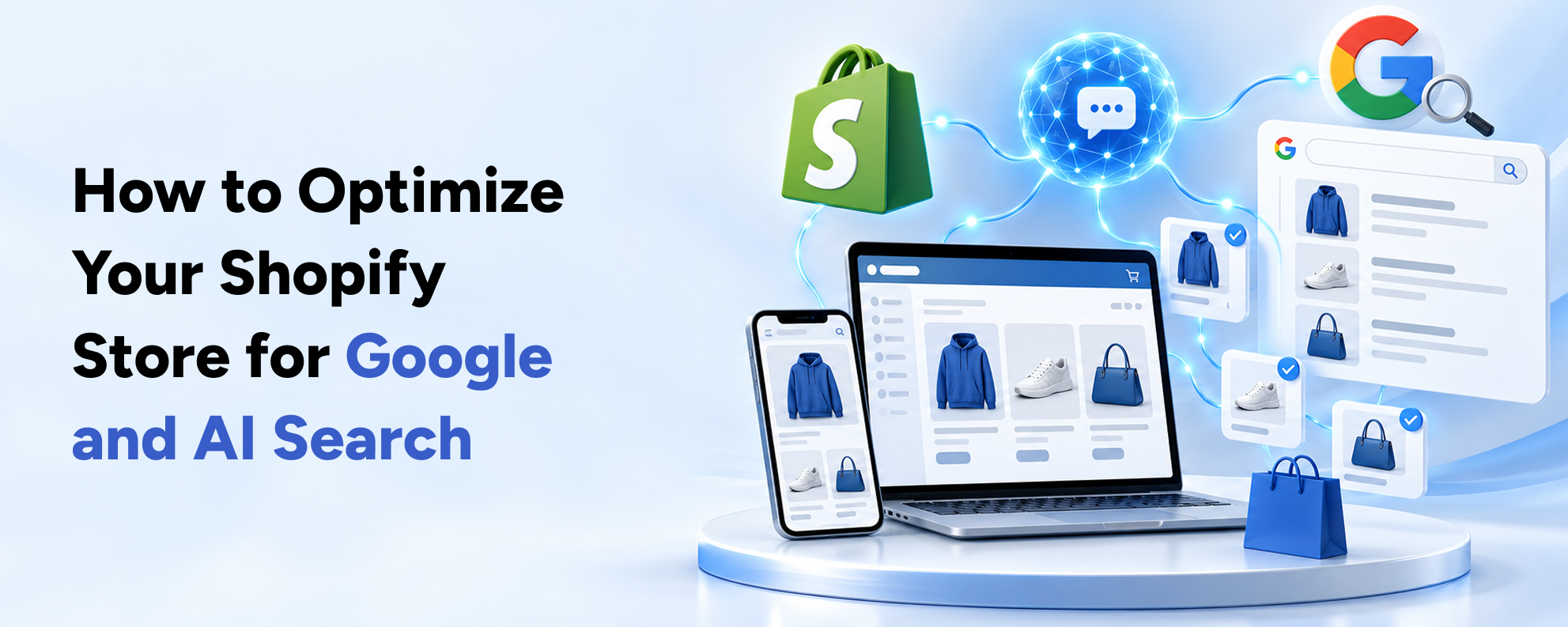
Ecommerce search is changing. Customers no longer rely exclusively on traditional Google results to discover products, compare brands and make purchasing decisions.
They also use Google AI Overviews, AI Mode, ChatGPT and other AI-powered shopping assistants to research products and find suitable options.
For Shopify businesses, this creates an important opportunity: making products and brand information easier to discover across both traditional search engines and emerging AI-powered experiences.
However, simply launching a Shopify website does not guarantee visibility.
Your store needs relevant product content, a clear technical structure, accurate product information, effective internal linking and a trustworthy online presence.
AI search introduces additional considerations, including how product information is retrieved, compared and presented in generated responses.
The good news is that many effective Shopify SEO practices also support AI search visibility.
In this guide, we'll explain how to optimize your Shopify store for Google and AI search, improve product discoverability and connect organic visibility with measurable ecommerce growth.
What Google and AI Search Mean for Shopify
Traditional search engine optimization focuses on helping search engines discover, understand and rank relevant website pages.
For an ecommerce store, these pages typically include products, collections, buying guides and informational content.
AI-powered search can use information from search indexes, product catalogs and other available sources to help customers compare options and answer more detailed questions.
Although the technologies and presentation differ, both environments depend on accurate, accessible and relevant information.
How Traditional Google Search Works
Consider a customer searching for:
“Best running leggings for women”
Google may display organic search results, shopping listings, images and relevant product collections.
A Shopify store with optimized collection pages, useful product descriptions and strong technical SEO has opportunities to appear in relevant results.
Traditional ecommerce SEO therefore focuses on elements such as keyword targeting, crawlability, page quality, internal links and product data.
How AI-Powered Search Is Different
Now imagine a customer asking:
“Which running leggings are best for high-intensity workouts, have moisture-wicking fabric and cost under $80?”
An AI-powered experience may evaluate multiple sources and present a comparison or suggested products.
The request contains several requirements:
- Product Type: Running leggings
- Activity: High-intensity workouts
- Feature: Moisture-wicking fabric
- Budget: Under $80
A product page containing clear information about fit, materials, performance features and pricing is more useful for this type of discovery than a page containing only a generic description.
Google's official guide to optimizing for generative AI search explains that AI features rely on established search ranking and quality systems.
It also describes how AI search may use related searches to gather information relevant to a complex question.
SEO vs AI Search Optimization
| Area | Traditional Shopify SEO | AI Search Optimization |
|---|---|---|
| Primary Goal | Improve organic search visibility | Improve discoverability in AI-powered experiences |
| Product Content | Keywords, relevance and helpful descriptions | Detailed attributes, comparisons and clear explanations |
| Technical Foundation | Indexability, links and site structure | Accessible content and reliable retrieval |
| Structured Data | Helps qualify products for search enhancements | Provides machine-readable product details where supported |
| Content Strategy | Product, collection and informational queries | Detailed customer questions and decision-making information |
| Trust Signals | Relevant authority, reviews and reliable content | Consistent, verifiable brand and product information |
| Measurement | Clicks, impressions, rankings and revenue | AI visibility, referrals, product discovery and conversions |
The two approaches overlap significantly.
Instead of treating them as separate marketing campaigns, Shopify businesses should build a connected strategy.
Begin With Technical Shopify SEO
Before optimizing for AI search, make sure traditional search engines can access and understand your Shopify store.
Technical SEO creates the foundation for both visibility and usability.
Even excellent content may struggle if important pages are inaccessible, poorly structured or duplicated unnecessarily.
1. Connect Google Search Console
Google Search Console helps businesses understand how Google discovers, indexes and displays their websites.
Start by verifying ownership of your Shopify domain.
Then review the indexing reports for important product, collection and blog pages.
Check for issues such as unexpected exclusions, incorrect canonical URLs and pages that cannot be accessed.
2. Submit Your Shopify Sitemap
Shopify automatically generates an XML sitemap.
For most stores, it is available at:
https://yourstore.com/sitemap.xml
The sitemap includes discoverable URLs for products, collections, pages and blog content.
Submit it through Google Search Console under the Sitemaps section.
Shopify's official sitemap documentation explains how to locate and submit the file.
Submitting a sitemap helps Google discover URLs, but it does not guarantee indexing.
3. Review Canonical URLs and Duplicate Content
Shopify stores can generate multiple URL paths or parameter combinations associated with the same product and collection content.
For example, a product may be accessible from different collection journeys.
Review canonical tags to ensure search engines understand the preferred URL.
Also investigate unnecessary indexable pages created through sorting, filtering or third-party applications.
Avoid making broad changes to indexing or canonical rules without understanding their impact.
4. Check Your Robots.txt Configuration
Shopify generates a default robots.txt configuration that is suitable for most stores.
It normally restricts unnecessary crawling of cart, checkout and other non-public URLs.
Customizing the file without technical expertise can accidentally prevent important pages from being discovered.
Before editing robots.txt, review whether a genuine crawling problem exists.
5. Fix Broken Links and Redirects
When products are discontinued or URLs change, visitors and search engines may encounter broken pages.
Use relevant redirects when an old URL has an appropriate replacement.
For example, a discontinued product may redirect to a suitable successor product.
However, redirecting every discontinued product to the homepage is not a useful default approach.
Technical SEO Checklist
- Verify Your Domain in Google Search Console
- Submit the Shopify XML Sitemap
- Inspect Important Product and Collection URLs
- Review Canonical Tags and Duplicate Pages
- Check Robots.txt and Indexing Directives
- Fix Broken Internal Links
- Implement Relevant 301 Redirects
- Verify That Important Content Is Accessible
A technically sound storefront is particularly important when using custom Shopify themes or headless architectures.
Professional Shopify development services should incorporate SEO requirements into the storefront architecture rather than treating them as an afterthought.
Find Keywords and Real Shopping Questions
Keyword research remains essential for Shopify SEO.
However, businesses should move beyond targeting only short product phrases.
Customers often search using detailed questions that reveal their requirements, problems and purchasing intent.
These questions also provide useful insight into content that may be relevant to AI-powered discovery.
customer support content.
Research Conversational Shopping Queries
AI-powered shopping questions may contain more context than a conventional keyword search.
For example:
“Which hair dryer is suitable for fine hair and offers adjustable heat settings?”
A business selling hair dryers should explain hair-type suitability and the available heat controls where relevant.
The objective is not to create a separate page for every possible question.
Instead, create complete and useful content that addresses related customer needs naturally.
Where to Find Relevant Questions
Useful research sources include Google Search Console, customer reviews, product support inquiries, internal site search and legitimate product comparisons.
Keyword research tools can also help identify related topics.
The best opportunities often come from questions that reveal why customers hesitate before purchasing.
Optimize Product Pages for Search and AI
Product pages are among the most important assets of a Shopify store.
They influence search visibility, product discovery, customer confidence and purchasing decisions.
For AI-powered shopping, detailed product information can also help systems determine whether a product matches a customer's specific requirements.
Shopify's guidance for optimizing stores for AI recommends combining clear customer-facing summaries with comprehensive specifications and structured product information.
1. Write Clear, Descriptive Product Titles
A useful product title should identify the item accurately.
Instead of:
“Premium Hair Tool”
Consider:
“Ceramic Hair Straightener with Adjustable Heat Settings”
The second title provides more context about the product.
However, only describe features that the product actually has.
Avoid adding unrelated keywords or exaggerated claims.
2. Create Original Product Descriptions
Copying manufacturer descriptions across every product page can limit the value your content provides.
Write descriptions that answer customer questions and distinguish individual products.
Useful information may include:
- Product Benefits and Intended Uses
- Materials or Ingredients
- Dimensions and Technical Specifications
- Compatibility and Suitability
- Size and Fit Information
- Care and Maintenance Instructions
- Warranty and Delivery Information
Organize the content into short sections so customers can quickly find relevant information.
3. Explain Who the Product Is For
AI-assisted shopping often involves matching customer requirements with product characteristics.
For example, a running shoe product page might explain:
- Suitable Running Surfaces
- Cushioning Characteristics
- Intended Training Use
- Fit Information
- Available Sizes
- Relevant Limitations
This information can help both human shoppers and systems comparing product options.
4. Make Purchasing Information Easy to Find
Customers should not need to search through multiple pages to understand essential purchasing conditions.
Display accurate prices, availability, delivery details and return information in appropriate locations.
Clear purchasing information strengthens the overall shopping experience.
It may also support product discovery systems that rely on structured product attributes.
Build Helpful Collection Pages
Collection pages connect broad product searches with relevant product selections.
They are particularly important for ecommerce SEO because many commercial queries refer to product categories rather than individual items.
Examples include:
“Women's gym leggings”
“Professional lash extension supplies”
“Organic skincare products”
A collection page should do more than display a grid of products.
Optimize Collection Titles and Introductions
Write concise introductions that explain what the collection contains and who it serves.
For example:
“Explore lightweight running leggings designed for comfortable training, with different fits, lengths and performance features.”
This provides useful context without turning the collection into a lengthy keyword-heavy article.
Improve Collection Navigation
Use filters that reflect meaningful product attributes.
Depending on the industry, customers may need to filter by size, material, color, price, compatibility or intended use.
A well-organized collection helps customers narrow their choices.
It also supports a clearer relationship between the category and its products.
Connect Collections to Supporting Content
Relevant buying guides can answer questions that are too detailed for a collection introduction.
For example, a leggings collection might link naturally to a guide explaining different fabrics or fits.
Similarly, a beauty collection may link to a guide about choosing products for specific styling needs.
This creates a logical relationship between commercial and informational content.
Implement Accurate Product Structured Data
Structured data helps search engines interpret information about a webpage.
For Shopify stores, product structured data is particularly valuable because it can describe prices, availability, brands, variants and other attributes in a standardized format.
Google supports Product and Offer structured data for eligible merchant listings.
These details can contribute to enhanced product appearances in Google Search.
Important Product Schema Properties
| Property | Purpose |
|---|---|
| Product Name | Identifies the item |
| Description | Explains the product |
| Image | References relevant product images |
| Brand | Identifies the manufacturer or brand |
| SKU | Identifies the product within inventory systems |
| GTIN | Provides a standardized product identifier where applicable |
| Offer | Describes purchasing information |
| Price and Currency | Communicates current pricing |
| Availability | Communicates stock status |
| Aggregate Rating | Represents genuine eligible product ratings |
Not every property is required for every product.
Follow Google's requirements for the relevant product experience.
The official Google merchant listing structured data documentation explains required fields, recommended properties and eligibility rules.
Avoid Duplicate or Incorrect Schema
Some Shopify themes already include product structured data.
Installing another SEO application may create duplicate or conflicting markup.
Before adding custom JSON-LD, inspect the existing output.
Check that the structured data matches the visible product information.
For example, do not mark a product as available when the storefront shows it as out of stock.
Similarly, do not invent customer ratings or mark up testimonials that do not represent genuine reviews.
Validate Your Implementation
Use Google's Rich Results Test to inspect important product URLs.
Review the Merchant Listings report in Google Search Console for relevant warnings and errors.
Structured data can improve how Google understands product information, but it does not guarantee a rich result or an AI recommendation.
Use Google Merchant Center and Shopify Catalog
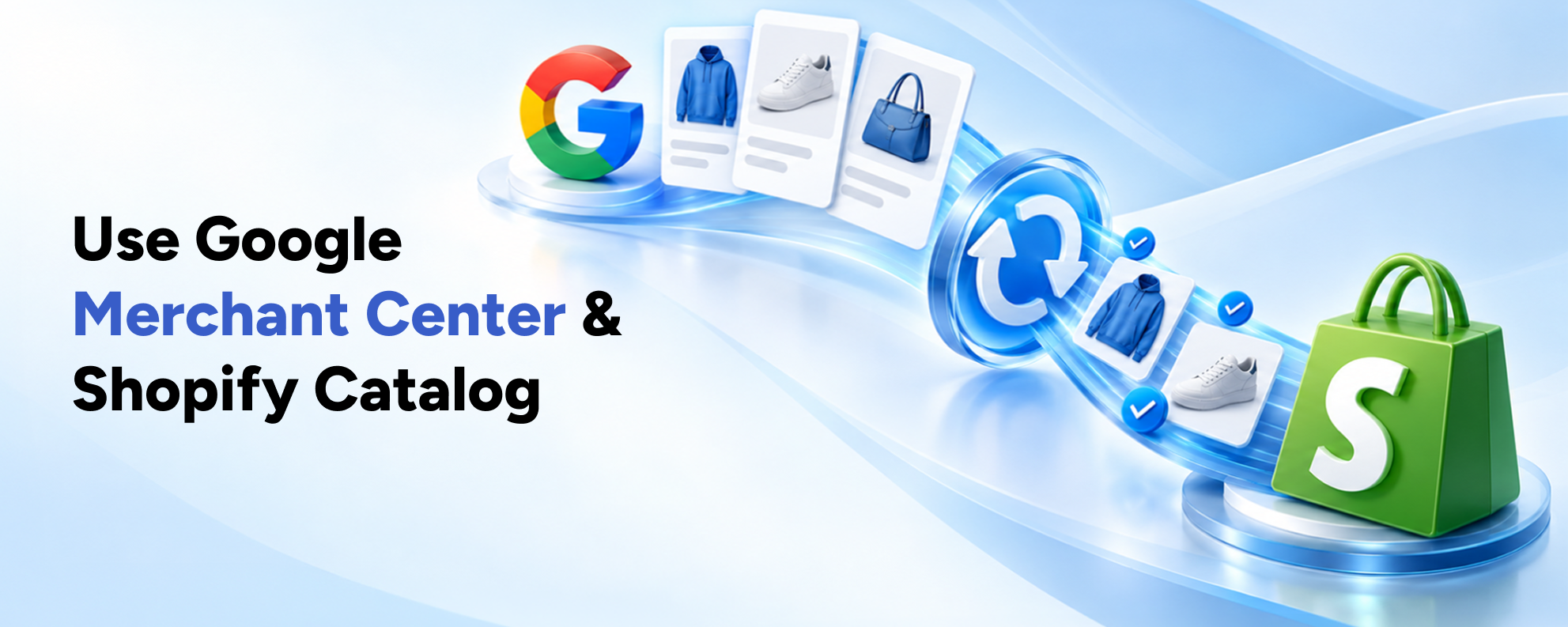
Product feeds are an important part of modern ecommerce discovery.
They provide structured information about the products a business sells.
For Shopify merchants, two important areas to review are Google Merchant Center and Shopify Catalog.
Google Merchant Center
Google Merchant Center helps businesses share product information with Google's shopping ecosystem.
Relevant data includes product titles, images, pricing, availability, identifiers and shipping information.
Google recommends using product structured data alongside Merchant Center feeds where appropriate.
Providing both can help maintain accurate product information across supported Google experiences.
Review the feed regularly for disapproved products, missing attributes and mismatches between the feed and your website.
Shopify Catalog and AI Shopping
Shopify Catalog helps eligible Shopify products become discoverable through supported shopping experiences and integrations.
Shopify's AI product optimization guidance recommends keeping the following information complete:
- Product Titles and Descriptions
- Product Images
- Product Types and Collections
- Brand or Vendor Information
- Relevant Product Identifiers
- Variant Details
- Inventory and Availability
- Shipping and Return Policies
These details help shopping systems understand the products and match them with relevant customer requests.
Shopify also provides agentic shopping capabilities and channel settings for supported AI experiences.
Product eligibility, availability and checkout functionality can differ by channel.
Shopify Knowledge Base
Shopify offers a first-party Knowledge Base app designed to help merchants manage store information used by supported AI shopping agents.
The app allows eligible merchants to review common questions and customize answers about their business.
For example, a customer might ask an AI assistant:
“Does this store offer returns on opened products?”
Accurate store policies and approved answers are more useful than vague or inconsistent statements.
The goal is to make verified business information easy to access.
Important Distinction
Adding products to a catalog does not guarantee they will appear in every AI-generated answer.
Each platform decides how to retrieve and recommend information.
Therefore, accurate data and channel configuration should be treated as visibility foundations rather than guaranteed ranking mechanisms.
Create Original Content That Answers Customer Questions
AI-powered search makes genuinely useful content even more important.
A Shopify store with only product pages may struggle to address complex customer questions.
Educational articles, buying guides and product comparisons can help customers understand their options before purchasing.
However, publishing large volumes of generic content is not an effective substitute for expertise.
Focus on Content That Adds Real Value
Google's generative AI guidance emphasizes original perspectives and information that extends beyond common knowledge.
For Shopify businesses, valuable content might include:
- Product Selection Guides
- Expert Product Comparisons
- Material and Ingredient Explanations
- How-To Tutorials
- Product Care Instructions
- Customer Questions Based on Real Support Requests
- Original Tests and Demonstrations
For example, a lash supply retailer could publish a detailed guide explaining differences between lash fan styles, adhesive characteristics and product selection considerations.
A generic article describing why eyelash extensions are popular would likely contribute less to a professional buyer's decision.
Organize Content for Readability
Use descriptive headings, short paragraphs and tables where comparisons genuinely help.
Provide clear answers near the beginning of relevant sections.
Then add useful context, limitations and supporting information.
This structure helps readers understand the content without requiring them to search through unnecessary introductions.
Expert Perspective
In Google's May 2026 guidance, Search Advocate John Mueller emphasized that:
“SEO best practices remain relevant and foundational to success with our generative AI features.”
The message is straightforward: AI search visibility should build on established SEO principles rather than replace them with unsupported shortcuts.
Connect Informational Content with Products
A buying guide should help customers continue their shopping journey.
Include relevant links to product collections or individual products where they genuinely support the topic.
Avoid forcing commercial links into every paragraph.
The objective is to connect useful information with relevant purchasing options.
Strengthen Brand Trust and Digital PR
Search visibility is not only a matter of website code and keyword targeting.
Customers also need confidence that a business is legitimate, knowledgeable and reliable.
Clear business information, authentic customer feedback and independent coverage can help establish credibility.
Create Complete Brand Information
Your Shopify store should clearly explain:
- Who Operates the Business
- What Products the Business Sells
- Where the Business Operates
- How Customers Can Contact Support
- Shipping and Return Conditions
- Relevant Product Guarantees
- Brand Expertise and Experience
Make this information consistent across your website and legitimate external profiles.
Publish Genuine Reviews
Customer reviews can offer useful product details that promotional copy may overlook.
For example, reviews may discuss sizing, durability, comfort or practical product use.
Encourage authentic feedback and display it accurately.
Never create fictional testimonials or manipulate ratings to influence search systems.
Earn Relevant Third-Party Mentions
Digital PR can support brand discoverability through genuine coverage from relevant publications, industry websites and expert communities.
For example, an established fitness apparel brand might receive coverage from fitness publications discussing a product innovation.
A beauty retailer may be referenced by professional educators or relevant industry resources.
These mentions should arise from genuine relevance, not artificial link schemes or purchased endorsements.
Keep Brand Information Consistent
Use consistent naming, product details and business policies across your website, shopping feeds and relevant business profiles.
Accurate information improves customer confidence and reduces the risk of conflicting answers across different channels.
Optimize Images, Video and Mobile Performance
Product discovery increasingly includes visual experiences.
Customers use product images, videos and visual search to understand items before purchasing.
Google's search ecosystem also includes image-based discovery through Google Images and Lens.
In September 2026, Google introduced additional Search Console reporting for multimodal search experiences.
This reinforces the importance of accurate product visuals and useful media.
Optimize Product Images
Use high-quality images that accurately represent the product.
Where relevant, include multiple views, detail images and real-world usage examples.
Add concise, descriptive alt text.
For example:
“Black women's running leggings with side pockets”
This is more informative than:
“Best leggings buy cheap fitness clothing”
Alt text should describe the image rather than repeat promotional keywords.
Include Helpful Product Videos
Videos can explain product functionality and demonstrate use.
Relevant examples include:
- Product Demonstrations
- Setup Instructions
- Styling Tutorials
- Product Comparisons
- Care and Maintenance Guidance
Keep videos accessible and avoid unnecessary autoplay behavior that interferes with browsing.
Improve Shopify Website Performance
Slow or unstable pages can frustrate shoppers, including visitors arriving from organic search.
Monitor Core Web Vitals such as Largest Contentful Paint, Interaction to Next Paint and Cumulative Layout Shift.
Common improvements include image optimization, reducing unnecessary scripts and simplifying heavy theme elements.
Prioritize Mobile Usability
Make it easy for smartphone users to view product information, select variants and complete purchases.
Clear filters, responsive layouts and accessible purchasing controls support a better customer experience.
A thoughtful Shopify website optimization strategy connects technical performance, user experience and conversion measurement.
Make Your Store Accessible to AI Search Crawlers
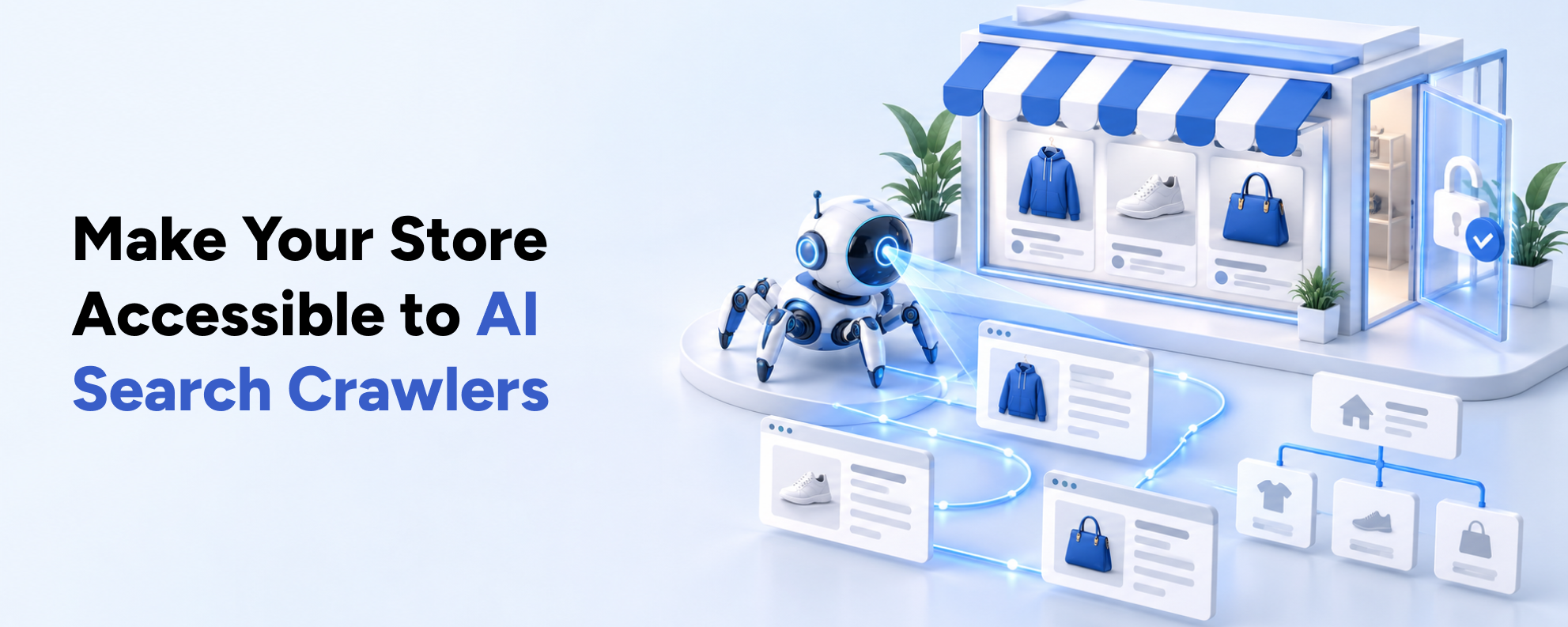
AI search visibility depends partly on whether relevant systems can discover and access your public information.
Traditional search engine crawlers and AI-specific crawlers do not necessarily operate in identical ways.
Therefore, Shopify merchants should review crawler accessibility carefully.
Check Google Crawling and Indexing
For Google's AI search features, foundational Google Search indexing remains important.
Ensure relevant product and informational pages can be crawled and indexed.
Avoid accidentally blocking important content through robots.txt rules or noindex directives.
Google does not require special AI-only markup to make ordinary indexed pages eligible for AI Overviews or AI Mode.
Understand ChatGPT Search Crawling
OpenAI provides a search crawler named OAI-SearchBot.
According to OpenAI's publisher guidance, website owners who want their content discoverable in ChatGPT search should avoid blocking that crawler where access is appropriate.
Crawler settings and server-level protections can affect discoverability.
However, allowing access does not guarantee that an individual product or page will be featured in a ChatGPT response.
What About LLMS.txt?
Some businesses use an llms.txt file to provide AI tools with a structured summary of important website content.
However, llms.txt is not a required Google Search feature.
Google's 2026 generative AI optimization guidance specifically discourages spending resources on unnecessary AI text files as a substitute for proven SEO improvements.
A voluntary llms.txt implementation should therefore be treated as an optional experiment for compatible tools.
It should not replace product feeds, structured data, crawlable pages or quality content.
Avoid Common AI Search Shortcuts
Be cautious about services promising guaranteed AI citations, instant recommendations or permanent visibility.
AI-generated results can change based on the question, user context, available sources and system behavior.
There is no reliable mechanism for forcing an AI assistant to recommend a particular Shopify store.
Focus instead on accurate information, genuine expertise and measurable discoverability.
Measure SEO and AI Search Performance
Optimization is most useful when supported by reliable measurement.
Traditional Shopify SEO metrics remain important, but newer AI search reports provide additional ways to understand discoverability.
Traditional Ecommerce SEO Metrics
Monitor the following indicators:
| Metric | What It Measures |
|---|---|
| Organic Search Clicks | Visitors arriving from unpaid search |
| Search Impressions | Frequency of appearance in search results |
| Ranking Keywords | Search terms associated with visibility |
| Indexed Pages | URLs available in the search index |
| Product Engagement | Customer interaction with product content |
| Add-to-Cart Rate | Sessions that add items to the cart |
| Ecommerce Conversion Rate | Share of sessions resulting in purchases |
| Organic Revenue | Revenue attributable to organic traffic |
These metrics help connect visibility with meaningful business outcomes.
Google Generative AI Performance Reports
In June 2026, Google introduced dedicated generative AI performance reporting in Search Console.
According to Google's announcement, the reports were rolled out worldwide by August 31, 2026.
They provide visibility data for supported generative AI experiences, including impressions, pages, countries and dates.
This allows Shopify businesses to review which pages appear in AI-powered search experiences and monitor changes over time.
Monitor AI Search Referrals
Where analytics identifies referral traffic from AI tools, monitor those visits separately.
Review the landing pages, engagement and conversions associated with that traffic.
However, AI referral attribution is not always complete.
Some AI interactions may influence purchasing decisions without generating a directly measurable website visit.
Measure Business Impact, Not Just Visibility
A store with increasing AI impressions but declining sales still needs a deeper performance review.
Likewise, a smaller number of highly qualified visitors may contribute more revenue than a larger number of visitors with little purchasing intent.
Evaluate search performance alongside product engagement, conversion rate and ecommerce revenue.
Suggested Performance Dashboard
| Category | Recommended KPIs |
|---|---|
| Traditional SEO | Organic clicks, impressions and indexed URLs |
| AI Search | Generative AI impressions and visible pages |
| Product Discovery | Relevant product and collection engagement |
| Customer Acquisition | Organic and AI-attributed referral sessions |
| Conversion | Add-to-cart rate and checkout completion |
| Revenue | Organic revenue and revenue per session |
Measure comparable periods and account for seasonality, tracking changes and major advertising campaigns.
Practical Shopify Examples
The following examples show how the combined approach can apply to different industries.
Example 1: Wellness Ecommerce — Live Ultimate
Wellness shoppers often need detailed information about ingredients, usage and product benefits before purchasing.
A Shopify store selling wellness products can improve discovery by publishing complete ingredient information, clear product comparisons and educational buying guides.
Its content should connect directly to relevant product pages and subscription choices.
The Live Ultimate Shopify case study from Basiltech Solutions explores the importance of clearer product journeys and purchasing options for a wellness brand.
For Google and AI search, the broader lesson is to make important product information understandable and accessible while helping customers move confidently toward purchase.
Example 2: Premium Product Ecommerce — Bladnoch
Premium whisky shopping involves more than displaying product names and prices.
Customers may research tasting notes, product expressions, maturation details and regional availability.
Detailed product information and clearly organized collections help customers compare relevant options.
Basiltech's Bladnoch case study demonstrates the relationship between premium storytelling, international shopping journeys and product discovery.
The same principle applies to other premium ecommerce industries: useful product knowledge should connect naturally with an intuitive buying experience.
Example 3: Fitness Apparel and Product Attributes
Consider a fitness apparel brand selling leggings for different workout activities.
A customer might ask:
“Which leggings are suitable for strength training and provide supportive fabric without restricting movement?”
A useful product page should describe verified material properties, fit, support characteristics and intended use.
Collection pages can organize products by activity while buying guides explain how to choose the right option.
This approach supports traditional search intent and creates more informative product content for AI-assisted comparison.
These examples are intended to illustrate optimization approaches. They do not establish that individual AI-search improvements have already been measured or achieved.
A 30-Day Shopify SEO and AI Search Plan
Businesses do not need to optimize every page simultaneously.
A structured 30-day plan can help prioritize the highest-impact opportunities.
| Timeline | Main Focus | Recommended Actions |
|---|---|---|
| Week 1 | Technical SEO Audit | Review indexing, sitemaps, canonicals, robots.txt and Search Console |
| Week 2 | Product & Collection SEO | Optimize priority titles, descriptions, product attributes and collection content |
| Week 3 | AI Shopping Readiness | Validate structured data, Merchant Center feeds, Shopify Catalog and store policies |
| Week 4 | Content & Measurement | Publish useful guides, improve internal links and configure SEO/AI reporting |
Week 1: Fix Technical Barriers
Identify pages that search engines cannot access or interpret correctly.
Prioritize important products and collections.
Avoid spending time on minor metadata changes while major indexing problems remain unresolved.
Week 2: Improve Commercial Pages
Select priority products based on customer demand, revenue potential and search relevance.
Improve their descriptions, specifications and purchasing information.
Review collection navigation and internal linking.
Week 3: Strengthen Product Data
Check structured data accuracy and investigate any product feed errors.
Confirm that pricing, availability, variants and store policies are consistent.
Review supported Shopify AI shopping settings and the Knowledge Base app where appropriate.
Week 4: Publish and Measure
Create at least one genuinely useful guide addressing a meaningful customer question.
Connect the guide to relevant product pages.
Then establish a reporting baseline for traditional SEO, AI visibility and ecommerce outcomes.
What Should Happen After 30 Days?
The first month should establish a technically sound foundation and a measurable optimization roadmap.
It does not guarantee specific rankings, traffic increases or AI citations.
Sustainable results usually require ongoing improvements, content development, technical maintenance and performance analysis.
Common Mistakes to Avoid
Shopify businesses can waste significant resources by investing in tactics that do not address underlying search or customer experience problems.
1. Publishing Generic AI-Generated Content at Scale
Mass-producing articles without original insights may create pages that add little value.
Use AI tools to support research and editing, but ensure published content is accurate, relevant and genuinely useful.
2. Ignoring Product Specifications
Short promotional descriptions often fail to answer practical shopping questions.
Include accurate attributes that help customers compare products.
3. Using Incorrect Structured Data
Structured data must match visible product information.
False ratings, inconsistent prices and misleading availability information can undermine eligibility and trust.
4. Blocking Important Pages
Incorrect robots.txt or indexing changes can reduce discoverability.
Test changes before deploying them.
5. Treating LLMS.txt as a Ranking Shortcut
An AI-focused text file cannot compensate for poor product data, inaccessible pages or weak content.
Prioritize proven technical and ecommerce SEO fundamentals.
6. Ignoring Digital Marketing and Conversions
Organic visibility has limited commercial value if the storefront provides a confusing shopping experience.
Connect SEO work with UX, landing page optimization and conversion measurement.
7. Expecting Guaranteed AI Recommendations
No responsible SEO strategy can guarantee that a specific AI assistant will recommend a product in every relevant response.
Visibility depends on multiple systems and evolving criteria.
Focus on improving the information and experiences within your control.
Frequently Asked Questions
How do I optimize my Shopify store for Google search?
Start by verifying your website in Google Search Console and submitting your Shopify sitemap. Optimize product titles, descriptions, collection pages and internal links. Ensure important pages are indexable, implement accurate structured data and improve website performance. Regularly review organic traffic, indexing reports and ecommerce conversions to identify improvement opportunities.
Can Shopify products appear in ChatGPT search results?
Shopify products may be discoverable through supported AI shopping integrations and public web search. Complete product data, appropriate channel settings and accessible content can improve eligibility. However, not every product appears in every AI response, and inclusion or recommendation is not guaranteed.
Does Google AI Overviews require separate SEO optimization?
No. Google states that established SEO best practices remain relevant for AI Overviews and AI Mode. Useful original content, technical accessibility, clear site structure and accurate ecommerce information remain foundational. There is no special markup or separate AI ranking requirement that guarantees inclusion.
What is Shopify AI SEO?
Shopify AI SEO refers to optimizing Shopify content and product information for discoverability across AI-powered search and shopping experiences. It includes conventional SEO, detailed product attributes, structured data, product feeds, trustworthy business information and AI-channel readiness. It should complement, not replace, traditional SEO.
Is structured data important for AI search?
Structured data helps systems interpret standardized product information such as names, prices, availability and variants. It is particularly valuable for supported search enhancements and merchant listings. However, structured data does not guarantee inclusion in AI-generated answers, and merchants should follow each platform's documented requirements.
Does Shopify automatically generate an XML sitemap?
Yes. Shopify automatically generates a sitemap.xml file containing discoverable product, collection, page and blog URLs. Merchants can submit the sitemap in Google Search Console to help Google find their content. Sitemap submission does not guarantee that every page will be indexed.
Do I need an llms.txt file for Shopify AI search optimization?
No. Google does not require llms.txt for AI Overviews or AI Mode. Some third-party tools may experiment with the format, but its effectiveness varies and it is not a substitute for technical SEO, quality content or accurate product data. Treat it as optional rather than essential.
How can I measure my Shopify store's AI search visibility?
Use Google Search Console's generative AI performance reporting for supported Google AI features. You can also monitor identifiable referral traffic from AI platforms, relevant brand mentions and ecommerce conversions. These measurements provide useful indicators, although complete attribution across all AI interactions is not always possible.
How long does Shopify SEO take to show results?
SEO timelines vary according to competition, website history, technical condition and the changes implemented. Technical fixes may be discovered relatively quickly, while substantial improvements in search visibility and revenue can take months. AI search visibility is also variable and cannot be guaranteed within a fixed period.
Can SEO and digital marketing work together to increase Shopify sales?
Yes. SEO can attract customers researching relevant products, while paid advertising, email marketing and remarketing support other stages of acquisition and retention. Conversion optimization helps those visitors navigate the store and complete purchases. The strongest strategy evaluates all channels against customer engagement and business outcomes.