
Table of Contents
- Why Ecommerce Marketing Is Changing in 2027
- Trend 1: AI Shopping Agents and Agentic Commerce
- Trend 2: AI Search and Conversational Product Discovery
- Trend 3: Social Commerce and Creator-Led Shopping
- Trend 4: Privacy-First Personalization
- Trend 5: Customer Retention and Lifecycle Marketing
- Trend 6: AI-Powered Advertising and Smarter Measurement
- Trend 7: Visual Commerce and Interactive Shopping
- Trend 8: Omnichannel and International Ecommerce
- Trend 9: Value-Focused Shopping and Delivery Transparency
- Trend 10: Sustainability and Verifiable Brand Trust
- Ecommerce Marketing Trends Comparison Table
- Which Trends Should Your Business Prioritize?
- A 90-Day Ecommerce Marketing Action Plan
- Real-World Ecommerce Examples
- How to Measure Ecommerce Marketing Success
- Frequently Asked Questions
What if customers stopped searching through dozens of ecommerce websites and simply asked an AI assistant to find the right product?
What if a short Instagram video became the starting point of a purchase, while personalized recommendations and automated follow-ups handled the rest of the customer journey?
These possibilities are no longer distant concepts. Several technologies are already changing how people discover, evaluate and purchase products online.
As 2027 approaches, ecommerce businesses face an important question: Which marketing trends deserve their attention and investment?
Artificial intelligence, social commerce, first-party customer data and automated advertising are creating new opportunities. At the same time, shoppers continue to expect competitive prices, reliable delivery, trustworthy brands and convenient purchasing experiences.
For businesses running on Shopify or other ecommerce platforms, success will depend on how effectively these elements work together.
A beautiful website alone may not attract qualified shoppers. Strong advertising may struggle when product pages fail to convert. Even advanced AI tools provide limited value when product information and customer data are inaccurate.
The future of ecommerce marketing is not about adopting every new technology.
It is about understanding changing customer expectations and creating connected experiences that support profitable growth.
In this article, we explore 10 ecommerce marketing trends that could influence online shopping in 2027, explain the evidence behind them and show how businesses can prepare.
Quick Answer: What Are the Biggest Ecommerce Marketing Trends for 2027?
The most important ecommerce marketing trends to watch in 2027 include AI shopping agents, AI-powered search, social commerce, privacy-conscious personalization, customer retention marketing, automated advertising, visual shopping, omnichannel experiences, transparent delivery and verified sustainability claims.
These trends could change how customers find products, compare options and make purchasing decisions.
However, their commercial impact will vary by industry, market and customer behavior. Businesses should prioritize the opportunities that align with their products, customers and measurable goals.
Why Ecommerce Marketing Is Changing in 2027
Ecommerce has evolved considerably from the days when businesses could generate sales simply by launching a website and buying advertisements.
Today's customers move between search engines, social platforms, mobile applications, marketplaces and physical stores.
They research products through reviews, video demonstrations, recommendations and increasingly through AI-powered tools.
This creates more opportunities for discovery, but it also makes the purchasing journey less predictable.
What the Latest Research Tells Us
The 2026 DHL E-Commerce Trends Report surveyed 29,000 online shoppers and 5,800 ecommerce businesses across active global markets.
The research examines customer expectations around delivery, payments, social commerce, AI, sustainability and cross-border purchasing.
Meanwhile, Deloitte's 2026 Holiday Retail Survey found that 38% of surveyed US shoppers qualified as value seekers who actively use promotions, rewards and alternative products to make their purchases worthwhile.
These findings highlight an important tension.
Customers are interested in new shopping technology, but they still evaluate practical factors such as cost, convenience and trust.
Why Businesses Need a Connected Strategy
Consider an ecommerce brand investing in AI-assisted advertising.
The campaigns attract relevant visitors, but the store has confusing product navigation and unclear shipping information.
The technology may improve acquisition efficiency, yet customers can still abandon their purchases.
Similarly, an excellent Shopify storefront may struggle if the business has no effective SEO, paid marketing or customer retention strategy.
The strongest approach connects website design, technical development, customer acquisition and conversion optimization.
Let's examine the trends that could make this connection even more important in 2027.
Trend 1: AI Shopping Agents and Agentic Commerce
AI Could Become an Active Participant in the Buying Journey
One of the most significant ecommerce developments is the emergence of AI shopping agents.
Instead of manually comparing products across multiple websites, customers can describe what they need and receive relevant suggestions.
For example, a shopper might ask:
"Find comfortable running shoes under $120 for everyday training, with good cushioning and delivery available this week."
An AI shopping system can interpret requirements such as product type, budget, intended use and availability.
Depending on its capabilities and supported integrations, it may help compare products and guide the shopper toward checkout.
Why This Trend Matters for 2027
In January 2026, Shopify and Google announced the Universal Commerce Protocol, an open standard for interactions between shopping agents and commerce systems.
Shopify also expanded its agentic commerce infrastructure through Shopify Catalog and related developer tools.
These developments suggest that product discovery and purchasing may increasingly happen across AI-enabled experiences rather than exclusively through conventional websites.
However, AI-assisted commerce remains an evolving channel. Its commercial importance will depend on adoption, platform rules and customer trust.
How Ecommerce Businesses Can Prepare
Start by improving the information that describes your products.
Prioritize:
- Accurate Product Names and Descriptions
- Complete Product Specifications
- Correct Pricing and Availability
- Structured Product Attributes
- Clear Shipping and Return Policies
- Reliable Ecommerce Integrations
Shopify merchants should review the agentic selling capabilities and channel requirements available to their stores.
Businesses with specialized catalogues may also need custom integrations or improved product data architecture.
What to Measure
Monitor identifiable AI-referred sessions, AI-attributed orders, product discovery and ecommerce revenue where reliable reporting is available.
Do not assume that every AI recommendation creates a measurable referral.
2027 Outlook: AI shopping agents could become a meaningful additional discovery and purchasing channel, particularly for products that customers frequently compare.
Trend 2: AI Search and Conversational Product Discovery
Search Is Moving Beyond Short Keywords
Traditional ecommerce SEO often focuses on searches such as:
"Best running shoes"
"Skincare products"
"Professional hair straightener"
AI-powered search allows customers to express more detailed requirements.
For example:
"Which hair straightener has adjustable temperature settings and is suitable for fine hair?"
This changes the information customers expect when researching products.
A generic product description may not answer the question effectively.
Why AI Search Could Influence Ecommerce Marketing
Google introduced additional generative AI shopping capabilities during 2026.
Its AI search systems can help shoppers investigate complex questions and compare relevant information.
However, Google's guidance continues to emphasize established SEO fundamentals, including useful content, technical accessibility and accurate product information.
Therefore, AI search optimization should complement traditional SEO rather than replace it.
How to Prepare Your Ecommerce Website
Focus on creating product and collection pages that answer genuine customer questions.
Useful improvements include:
- Descriptive Product Titles
- Detailed Product Specifications
- Unique Product Descriptions
- Relevant Buying Guides
- Accurate Product Structured Data
- Helpful Internal Linking
- Clear Brand and Business Information
For example, a fitness brand could publish a guide comparing compression leggings with standard workout leggings.
The article could explain materials, intended uses, fit characteristics and relevant product differences.
Such content can support informed shopping while creating opportunities for traditional and AI-assisted discovery.
Google's ecommerce SEO documentation provides practical guidance for product data, website structure and technical optimization.
What About Generative Engine Optimization?
Generative Engine Optimization, often called GEO, describes efforts to make information more accessible and useful in AI-generated responses.
However, businesses should be cautious about claims that special formatting, excessive keyword repetition or AI-only text files guarantee recommendations.
The strongest foundation remains accurate, helpful and accessible information.
What to Measure
Review organic search visibility, relevant product impressions, non-branded traffic, AI referrals where available and ecommerce revenue.
2027 Outlook: Product-specific expertise and complete ecommerce data could become increasingly important as conversational search evolves.
Trend 3: Social Commerce and Creator-Led Shopping
Shopping Is Becoming More Integrated With Entertainment
Social media already plays an important role in product discovery.
Customers encounter products through Instagram Reels, TikTok videos, YouTube creators, livestreams and recommendations from people they follow.
Increasingly, these experiences also provide direct paths toward purchasing.
Social commerce connects product discovery and shopping within social environments.
What the Research Shows
According to EMARKETER's July 2026 social commerce report, US retail social commerce sales were forecast to exceed $100 billion in 2026.
Its January 2026 forecast also highlighted the influence of creators, younger shoppers and TikTok Shop on purchasing behavior.
These figures demonstrate why social commerce deserves attention. However, platform adoption and consumer behavior differ considerably between countries.
Why Creators Matter
Customers often want to see products used by real people before purchasing.
For example, a skincare shopper may find a demonstration more useful than a static advertising banner.
A fitness customer may want to see how workout clothing performs during movement.
A creator-led video can provide that context.
However, effective creator marketing requires genuine product relevance and appropriate disclosure of paid partnerships.
How Ecommerce Businesses Can Prepare
Develop a content strategy that combines product education with authentic demonstrations.
Useful formats include:
- Short Product Demonstrations
- Before-and-After Content Where Claims Are Supportable
- Styling and Usage Tutorials
- Product Comparison Videos
- Creator Collaborations
- Relevant Livestream Shopping Events
- Customer-Generated Product Content
Link social campaigns to relevant product pages rather than directing every visitor to the homepage.
Also test the mobile experience because many social visitors arrive through in-app browsers.
What to Measure
Monitor creator-attributed revenue, product page visits, campaign conversion rate, acquisition cost and return on ad spend.
Important Consideration
A viral video does not automatically generate profitable ecommerce sales.
Marketing teams should evaluate whether the campaign attracts suitable customers and whether revenue justifies the investment.
2027 Outlook: Creator-led shopping and short-form video could become even more closely connected with ecommerce transactions.
Trend 4: Privacy-First Personalization
Customers Want Relevance Without Unnecessary Tracking
Personalization has been part of ecommerce for years.
Retailers use product recommendations, customer segments and browsing behavior to present relevant information.
However, customers also expect businesses to handle their personal data responsibly.
This creates a challenge: how can ecommerce brands personalize shopping while respecting privacy?
The Growing Importance of First-Party Data
First-party data refers to information businesses collect directly through their own customer relationships.
Examples include purchase history, selected preferences, customer account activity and information voluntarily provided through forms.
Zero-party data refers to preferences customers intentionally share, such as preferred product categories or sizes.
These data sources can help businesses create relevant experiences without relying entirely on third-party tracking.
Shopify's2026 ecommerce personalization guidance emphasizes useful logged-in experiences and privacy-conscious personalization.
Practical Personalization Examples
Consider an apparel retailer.
A customer previously purchased a particular clothing size and expressed interest in running apparel.
With appropriate permissions and reliable data, the store could make relevant products easier to find.
A beauty retailer might offer a product finder that asks shoppers about their needs and recommends suitable categories.
These experiences should help customers rather than make them feel excessively monitored.
How Businesses Can Prepare
Focus on relevant, transparent data collection.
Recommended actions include:
- Create Useful Customer Account Benefits
- Collect Only Necessary Information
- Explain Marketing Consent Clearly
- Provide Easy Preference Management
- Segment Customers by Relevant Needs
- Protect Personal Information
- Review Third-Party Tracking Technologies
Avoid using sensitive or unnecessary personal information simply because a tool makes it technically possible.
What to Measure
Track customer engagement, personalization-assisted purchases, repeat purchase behavior and unsubscribe rates.
2027 Outlook: Effective personalization may depend increasingly on customer trust, transparent data practices and genuinely useful shopping experiences.
Trend 5: Customer Retention and Lifecycle Marketing
Ecommerce Growth Will Depend on More Than New Customers
Customer acquisition remains essential, but attracting new buyers repeatedly can require significant marketing investment.
Businesses also need strategies that encourage satisfied customers to return.
Lifecycle marketing focuses on communication and experiences across the customer relationship.
This includes first purchases, onboarding, repeat orders, subscriptions and re-engagement.
Why Retention Deserves More Attention
A brand that continuously attracts new customers but rarely receives repeat orders may struggle to build efficient long-term growth.
Retention marketing can help businesses develop stronger customer relationships without relying entirely on constant acquisition.
However, repeat purchase opportunities depend on product category.
A coffee brand has a different replenishment cycle from a furniture retailer.
Important Retention Strategies
Businesses should evaluate several approaches.
Personalized Email Marketing
Send relevant information based on customer interests and purchase history.
This could include helpful product guidance, new arrivals or appropriate replenishment reminders.
Subscription Options
For products purchased regularly, subscriptions can provide convenience.
A skincare brand might offer flexible deliveries for regularly used products.
However, customers should clearly understand billing terms and be able to manage their subscription easily.
Loyalty Programs
Rewards and member benefits can encourage ongoing engagement.
The value should go beyond collecting points that customers rarely use.
Post-Purchase Experiences
Order updates, product education and responsive customer support help maintain trust after checkout.
Shopify Opportunities
Shopify supports customer segmentation, marketing automation and integrations with customer engagement platforms.
Custom development may also help businesses create subscription experiences, loyalty functionality or more convenient repeat-order journeys.
For an example of how purchase options and product clarity influence ecommerce UX, explore Basiltech's Live Ultimate Shopify case study.
What to Measure
Monitor repeat purchase rate, customer lifetime value, subscription retention, returning customer revenue and customer acquisition cost.
2027 Outlook: Ecommerce brands may place greater emphasis on profitable customer relationships rather than measuring success exclusively through new-customer acquisition.
Trend 6: AI-Powered Advertising and Smarter Measurement
Advertising Automation Is Becoming More Capable
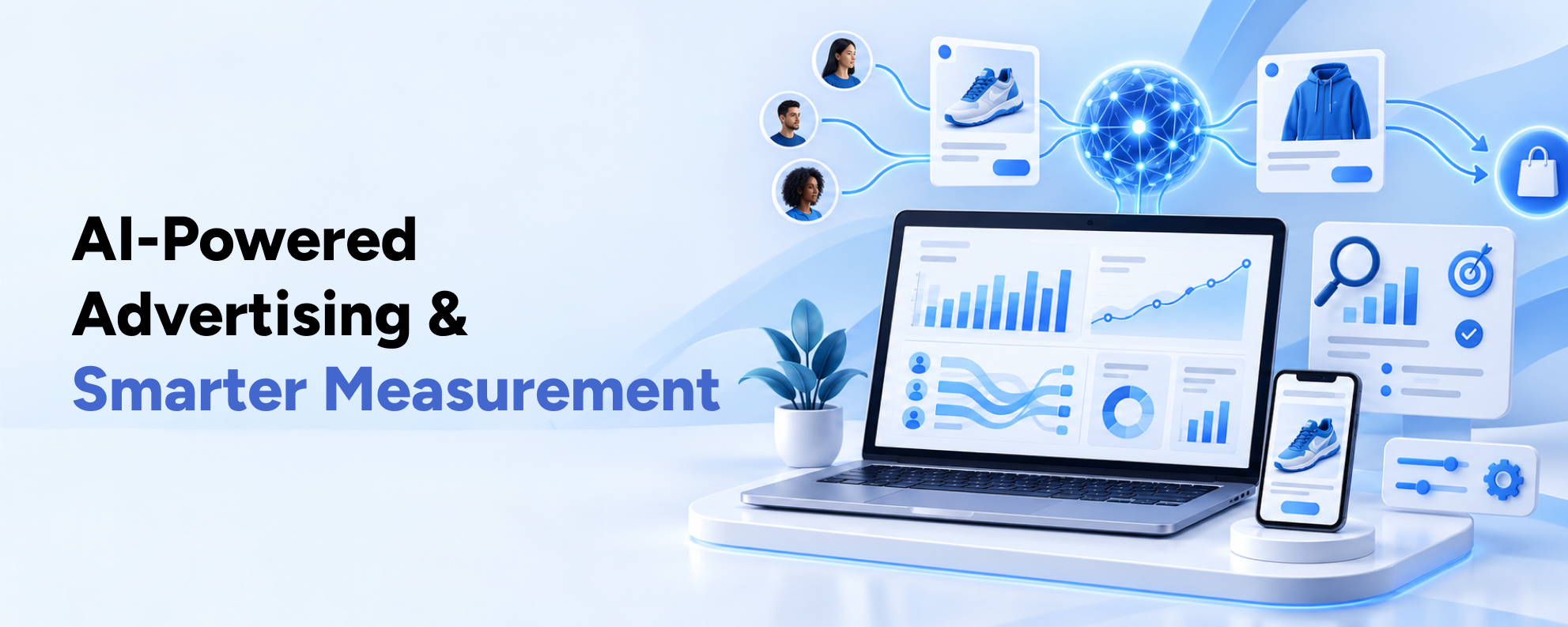
Digital advertising platforms increasingly use machine learning to optimize bidding, audience discovery and creative delivery.
Google Ads, Meta Ads and other platforms already provide automated tools designed to improve campaign efficiency.
In 2027, these capabilities could become more central to ecommerce marketing operations.
However, automation does not remove the need for strategy, accurate measurement or high-quality creative work.
What Changed in 2026?
Google expanded AI-powered advertising capabilities through AI Max, Performance Max and other campaign tools.
These systems can use relevant business data to improve targeting, bidding and creative selection.
Google's 2026 advertising strategy guidance also emphasizes the importance of creative quality and cross-platform data.
For ecommerce businesses, this means campaign inputs are increasingly important.
Why Marketing Measurement Must Improve
Advertising dashboards often report conversions using different attribution models.
As a result, businesses may struggle to determine whether a campaign generated truly additional sales or received credit for purchases that would have occurred anyway.
The Interactive Advertising Bureau's 2026 commerce media guidance emphasizes measurable business impact and consistent measurement practices.
How Businesses Can Prepare
Start with reliable conversion tracking and accurate product feeds.
Then focus on:
- Clear Campaign Objectives
- High-Quality Creative Assets
- Accurate Conversion Values
- Relevant Landing Pages
- First-Party Customer Data Where Permitted
- Profitability and Customer Acquisition Reporting
- Structured Campaign Testing
For example, a fashion retailer should evaluate more than advertising clicks.
It should examine whether campaigns generate orders, what those orders cost to acquire and whether they contribute sufficient margin.
What to Measure
Track customer acquisition cost, return on ad spend, contribution margin and incremental revenue where measurement supports it.
Important Consideration
A high ROAS does not always indicate a profitable campaign.
Margins, fulfillment costs, discounts and customer retention all affect the commercial outcome.
2027 Outlook: Automated advertising could increase the importance of accurate business data, strong creative strategies and profitability-focused reporting.
Trend 7: Visual Commerce and Interactive Shopping
Customers Want to Experience Products Before Buying
Product photographs remain important, but some customers need additional information before purchasing.
They may want to see how clothing fits, how furniture looks in a room or how a product works.
Visual commerce uses imagery, video and interactive experiences to help customers evaluate products.
This can include virtual try-on, 3D product models and augmented reality.
Why This Trend Matters
Google expanded AI-assisted shopping and virtual try-on experiences during 2026.
These developments reflect an ongoing effort to make online shopping more informative and visual.
However, interactive technology is not automatically useful for every product.
A simple household consumable may not need a 3D experience.
An expensive furniture item may benefit substantially from clearer spatial visualization.
Practical Ecommerce Applications
Consider the following examples.
| Industry | Useful Visual Experience |
|---|---|
| Fashion | Fit Guidance and Product Videos |
| Furniture | 3D Views and Room Visualization |
| Beauty | Product Demonstrations and Tutorials |
| Electronics | Interactive Feature Explanations |
| Home Decor | Scale References and Lifestyle Images |
| Fitness | Movement and Performance Demonstrations |
The right experience depends on the information customers need before purchasing.
How Businesses Can Prepare
Audit your product photography and visual content.
Identify products receiving frequent questions about size, appearance or functionality.
Then decide whether improved images, video or interactive tools provide the greatest value.
A professional Shopify website design strategy should make these experiences easy to use across desktop and mobile devices.
What to Measure
Track product engagement, add-to-cart rate, returns related to product expectations and revenue per session.
2027 Outlook: Visual and interactive shopping tools could become more common in categories where product appearance or fit strongly influences purchasing decisions.
Trend 8: Omnichannel and International Ecommerce
Customers Expect Consistency Across Shopping Channels
A customer may discover a product on social media, research it through Google, visit a physical store and complete the purchase online.
Others may buy through a marketplace and later visit the brand's website for support.
These journeys illustrate why ecommerce businesses need consistent information across channels.
Omnichannel commerce connects relevant customer experiences across online and offline touchpoints.
Why International Selling Is Relevant
Cross-border shopping also creates opportunities for businesses to reach customers beyond their original markets.
However, international expansion introduces complications involving currency, language, delivery, taxes and regional product availability.
A website that technically accepts international visitors may still provide an unsuitable purchasing experience.
What the Research Suggests
DHL's 2026 ecommerce research highlights the growing complexity of cross-border shopping and the importance of meeting customer expectations across delivery, payment and purchasing channels.
These issues could become increasingly relevant as ecommerce brands expand into new markets.
How Businesses Can Prepare
Review the customer experience across all important channels.
Ensure consistency in:
- Product Information
- Pricing and Promotions
- Inventory Availability
- Shipping and Return Policies
- Customer Support
- Brand Messaging
- Order Status Information
For international selling, evaluate localized currency, language, shipping and payment options.
Shopify Markets and supported integrations can help manage regional experiences.
However, configuration should reflect real operational capabilities.
Technical Development Considerations
Growing brands may need integrations between Shopify and inventory, fulfillment, CRM or ERP systems.
Reliable synchronization helps prevent situations where a product appears available on one channel but cannot be fulfilled.
What to Measure
Monitor revenue by market, conversion by region, inventory-related cancellations and fulfillment performance.
2027 Outlook: Strong international and omnichannel experiences may become increasingly important for brands expanding beyond a single storefront or market.
Trend 9: Value-Focused Shopping and Delivery Transparency
Customers Are Evaluating the Complete Cost of Buying
Advanced marketing technology can help customers discover products, but purchase decisions still depend on practical considerations.
Customers compare prices, evaluate product quality and consider shipping costs.
When additional charges appear unexpectedly, some shoppers reconsider their purchases.
This makes value communication and checkout transparency important ecommerce priorities.
What Recent Research Shows
Deloitte's October 2026 retail survey identified a substantial group of value-conscious customers who actively seek promotions, rewards and alternative products.
Meanwhile, DHL's 2026 ecommerce research highlights delivery and returns as major components of customer expectations.
These findings suggest that convenience and clear value will remain important beyond 2026.
What Value-Focused Marketing Looks Like
Value does not always mean offering the lowest price.
For example, a premium apparel brand may justify higher prices through materials, durability and relevant product benefits.
A professional beauty supplier may offer bulk-purchasing convenience.
A wellness business may provide flexible subscription options.
The objective is to explain why the product is appropriate for the customer's needs.
How Ecommerce Businesses Can Prepare
Improve important purchasing information.
Recommended actions include:
- Display Clear Product Pricing
- Explain Shipping Charges Early
- Communicate Realistic Delivery Estimates
- Make Return Policies Accessible
- Explain Bundle Savings Accurately
- Avoid Misleading Discount Claims
- Offer Suitable Payment Options
- Simplify Checkout Interactions
Businesses should also evaluate whether promotions improve profit rather than merely increase order volume.
Conversion Optimization Opportunity
If your store receives significant traffic but relatively few completed purchases, investigate where customers encounter hesitation.
For example, a high add-to-cart rate combined with low checkout completion may indicate issues involving total cost, delivery or payment options.
Basiltech's Shopify CRO and ongoing growth services focus on identifying and testing improvements to these purchasing journeys.
What to Measure
Track checkout completion, shipping-related abandonment, average order value, revenue per session and profitability.
2027 Outlook: Brands that communicate value clearly and offer convenient purchasing experiences may be better positioned to compete for price-conscious shoppers.
Trend 10: Sustainability and Verifiable Brand Trust

Customers Are Looking Beyond Product Claims
Environmental responsibility, product durability and ethical business practices influence purchasing decisions for some customer groups.
However, sustainability marketing can create credibility problems when businesses make vague or unsupported claims.
Statements such as "100% environmentally friendly" are difficult to substantiate without clear evidence and relevant context.
As consumers become more familiar with sustainability messaging, transparency may become increasingly important.
What the Research Shows
DHL's 2026 ecommerce report found that 35% of surveyed online shoppers reported abandoning a purchase because sustainability credentials were missing.
This result reflects the surveyed markets and methodology. It should not be interpreted as a universal abandonment rate for every store.
The report also examines customer interest in recycling, refurbished products and sustainable delivery options.
How Sustainability May Influence Ecommerce
Relevant initiatives can include:
- Accurate Product Material Information
- Repair and Maintenance Guidance
- Verified Sustainability Certifications
- Reusable or Reduced Packaging Where Applicable
- Product Durability Information
- Legitimate Recycling or Trade-In Programs
- Transparent Supply Chain Information
Not every business needs to implement every initiative.
The appropriate approach depends on product category, operations and customer expectations.
The Risk of Greenwashing
Greenwashing occurs when environmental claims exaggerate or misrepresent a product's actual impact.
For example, a business should not claim that an entire product is sustainable simply because one packaging component contains recycled material.
Marketing teams should verify claims and explain their scope.
Customer trust depends on credible evidence rather than impressive-sounding language.
Connecting Trust With Brand Marketing
Social impact programs, ethical business practices and community initiatives can support brand storytelling when they are genuine.
However, businesses should avoid presenting charitable donations or environmental claims without supporting records.
The same principle applies to product reviews, testimonials and guarantees.
What to Measure
Review customer feedback, product trust indicators, return behavior, repeat purchases and engagement with relevant brand information.
2027 Outlook: Verifiable claims and transparent business practices may become stronger differentiators than broad sustainability slogans.
Ecommerce Marketing Trends Comparison Table
| Ecommerce Trend | Main Opportunity | Recommended Business Focus |
|---|---|---|
| AI Shopping Agents | New product discovery and purchasing channels | Product data and commerce integrations |
| AI Search | More detailed product discovery | SEO, structured data and helpful content |
| Social Commerce | Creator-led acquisition and direct shopping | Video, creators and social campaigns |
| Privacy-First Personalization | More relevant customer experiences | First-party data and consent |
| Retention Marketing | Stronger repeat customer relationships | Email, subscriptions and loyalty |
| Automated Advertising | Improved campaign operations | Tracking, creative and profitability |
| Visual Commerce | More informative product evaluation | Video, product imagery and UX |
| Omnichannel Commerce | Consistent multi-channel experiences | Integrations and localization |
| Value-Focused Shopping | Reduced purchasing hesitation | Pricing clarity and checkout |
| Sustainable Brand Trust | Stronger customer confidence | Verified claims and transparency |
The following table summarizes the ten trends and their potential business applications.
These trends are not equally important for every business.
A professional equipment supplier may prioritize detailed product data and acquisition efficiency.
A fashion brand may benefit more from creator-led content, visual shopping and personalization.
A recurring-purchase business may focus on customer retention and subscription convenience.
Which Trends Should Your Business Prioritize?
Following every ecommerce trend can become expensive and difficult to manage.
Instead, prioritize improvements based on your business model, customer needs and available resources.
Small Ecommerce Businesses
Smaller stores should begin with foundational improvements.
Focus on relevant product content, reliable tracking, mobile shopping, clear pricing and a manageable customer acquisition strategy.
AI readiness may be useful, but it should not replace fixing technical or conversion problems.
Growing Direct-to-Consumer Brands
Established DTC businesses may benefit from customer segmentation, product recommendations, lifecycle marketing and stronger campaign measurement.
They may also have sufficient traffic to evaluate changes through controlled testing.
Enterprise Ecommerce Businesses
Larger brands often face more complex requirements.
These may include multiple storefronts, international markets, advanced customer data systems and integrations with operational software.
For these businesses, scalable technical architecture becomes especially important.
A Practical Priority Matrix
| Business Challenge | Trend to Prioritize |
|---|---|
| Low Organic Visibility | AI Search and Traditional SEO |
| Limited New Customer Acquisition | Social Commerce and Paid Advertising |
| Poor Product Engagement | Visual Commerce and Personalization |
| Low Repeat Purchase Rate | Lifecycle Marketing |
| High Cart Abandonment | Value Transparency and Checkout |
| Complex International Operations | Omnichannel and Localization |
| Incomplete Product Information | AI Shopping Readiness |
| Weak Customer Trust | Transparent Brand Communication |
The most effective investment usually addresses a measurable business problem rather than a trend's popularity.
A 90-Day Ecommerce Marketing Action Plan
Businesses can begin preparing for 2027 without immediately launching ten separate initiatives.
A structured plan helps identify important opportunities while keeping resources focused.
Days 1–30: Audit Your Current Ecommerce Performance
Review your store's technical performance, customer acquisition and conversion funnel.
Important activities include:
- Audit Shopify or Ecommerce Analytics
- Review Google Search Console
- Check Product Data Completeness
- Analyze Existing Marketing Campaigns
- Review Mobile Shopping Performance
- Identify Checkout Abandonment Patterns
- Evaluate Customer Retention
The objective is to establish reliable baseline data.
Days 31–60: Improve High-Impact Experiences
Choose the problems most likely to affect qualified customers.
Potential improvements include product page optimization, collection navigation, better campaign landing pages and relevant customer segmentation.
For AI readiness, improve product attributes and accurate structured data.
For social commerce, test useful product demonstration content.
Avoid making multiple major changes without tracking their effects.
Days 61–90: Test New Marketing Opportunities
Once the foundation is stronger, test selected initiatives.
For example, a business could evaluate a creator campaign, an email automation or improved product recommendations.
Set clear objectives and monitor results.
| Period | Main Focus | Suggested Deliverables |
|---|---|---|
| Days 1–30 | Audit & Research | Performance baseline and prioritized issues |
| Days 31–60 | Storefront & Marketing Improvements | Optimized pages, tracking and customer journeys |
| Days 61–90 | Testing & Growth | Campaign tests, reporting and next-stage roadmap |
What Results Should You Expect?
A 90-day initiative should help businesses understand their opportunities, implement selected improvements and establish measurable performance reporting.
It does not guarantee specific revenue, traffic or conversion increases.
Results depend on product demand, market competition, implementation quality and the existing business environment.
Real-World Ecommerce Examples
The following scenarios illustrate how different trends can apply in practice.
Example 1: Wellness Ecommerce and Customer Retention
A wellness brand selling regularly purchased products may benefit from subscription options, educational product information and relevant follow-up campaigns.
Customers often want to understand ingredients, product benefits and purchasing terms before buying.
Therefore, informative product pages and transparent subscription controls matter.
Basiltech's Live Ultimate case study explores the relationship between product discovery, subscription choices and ecommerce user experience.
The broader lesson is that customer retention begins with a clear and trustworthy initial purchase.
Example 2: Fashion Ecommerce and Social Commerce
Consider an activewear brand launching a new collection.
Creator-led videos can demonstrate product fit and intended activity.
Relevant advertisements can direct shoppers to dedicated collection pages.
However, customers still need accurate sizing information, mobile-friendly product selection and a reliable checkout experience.
Social media attention and ecommerce conversion must work together.
Example 3: Professional Beauty Ecommerce and Product Data
A professional lash supply retailer may offer products with detailed technical specifications.
Customers may search for exact sizes, materials, application characteristics or compatible accessories.
Accurate product information supports traditional search, product filtering and potentially AI-assisted comparison.
Meanwhile, relevant bundles and repeat-purchase campaigns can support purchasing convenience.
What These Examples Demonstrate
Ecommerce trends should not be implemented as disconnected features.
The strongest approach connects the customer problem, website experience and marketing strategy.
For Basiltech Solutions, this means combining website design, Shopify development and digital growth planning around measurable business objectives.
How to Measure Ecommerce Marketing Success in 2027
New technology introduces additional data, but businesses still need to measure commercial performance.
Metrics should connect customer discovery with purchasing outcomes.
Important KPIs for Ecommerce Businesses
Focus on Revenue Quality
A campaign may generate substantial sales but still produce weak profit after advertising, fulfillment, discounts and returns.
Likewise, a high conversion rate is not automatically positive if the average order value or margin falls significantly.
Businesses should review performance holistically.
Compare Equivalent Periods
Seasonality, promotional activity and changes in analytics methodology can affect reported performance.
Use consistent measurement definitions and document important changes.
Where possible, controlled experiments can help determine whether specific improvements caused meaningful results.
The goal is to build a reliable measurement system that supports better decisions.
| Category | Primary KPIs |
|---|---|
| Customer Acquisition | Qualified traffic and customer acquisition cost |
| Organic Search | Organic clicks and organic revenue |
| AI Discovery | Identifiable AI referrals and attributed orders |
| Social Commerce | Creator-attributed sales and campaign ROAS |
| Personalization | Engagement and conversion by relevant segment |
| Customer Retention | Repeat purchase rate and customer lifetime value |
| Advertising | Incremental revenue, CAC and contribution margin |
| Website Experience | Add-to-cart rate and checkout completion |
| International Sales | Revenue and conversion by market |
| Overall Profitability | Contribution margin and sustainable revenue growth |
Frequently Asked Questions
What are the biggest ecommerce marketing trends for 2027?
Important trends include AI shopping agents, conversational search, social commerce, first-party personalization, lifecycle marketing and automated advertising. Visual shopping, international ecommerce, delivery transparency and verifiable sustainability claims also deserve attention. Their importance varies by product category, market and customer behavior.
How will AI change ecommerce marketing in 2027?
AI could influence how customers research products, compare options and complete purchases. It may also support advertising optimization, customer segmentation and content workflows. However, businesses still need accurate product information, effective website experiences and reliable measurement. AI tools cannot guarantee product recommendations or sales growth.
Will AI shopping agents replace ecommerce websites?
There is no strong basis for assuming ecommerce websites will disappear. AI agents may introduce additional discovery and purchasing channels, but merchants still need product information, reliable commerce systems, customer support and brand experiences. Websites and AI shopping channels are likely to coexist in different forms.
Is SEO still important for ecommerce businesses in 2027?
Yes. Traditional SEO remains important for product visibility, organic traffic and discoverability. Accurate product pages, technical accessibility, structured data and useful content can also support AI-powered discovery. Businesses should continue optimizing for search intent rather than abandoning proven SEO fundamentals.
How can small ecommerce businesses prepare for 2027?
Start with accurate product information, mobile-friendly website design, reliable analytics and a clear customer acquisition strategy. Review SEO, product pages, checkout and customer retention before investing heavily in emerging technology. Small, measurable improvements can be more practical than launching several initiatives simultaneously.
Why is social commerce becoming important?
Social commerce connects product discovery with shopping through platforms such as TikTok, Instagram and other social environments. Creator demonstrations, short videos and livestreams can help customers evaluate products. However, businesses should measure qualified traffic, sales and profitability rather than relying only on views or engagement.
What role will personalization play in ecommerce?
Personalization can help businesses present relevant products, content and communications based on customer needs and permitted data. First-party information and voluntarily shared preferences may become increasingly valuable. Effective personalization should provide genuine customer benefits while respecting privacy and consent requirements.
Is customer retention more important than acquiring new customers?
Both are important. Acquisition introduces new buyers, while retention helps businesses maintain customer relationships and encourage repeat purchases. Their relative value depends on the business model. Stores selling regularly replenished products may prioritize subscriptions and lifecycle marketing, while other categories may have longer purchasing cycles.
How should ecommerce businesses measure digital marketing ROI?
Businesses should measure attributed revenue, acquisition costs, advertising spend, conversion performance and relevant profit margins. Customer lifetime value can provide additional context for retention-focused strategies. Avoid relying on ROAS alone because fulfillment costs, discounts and other expenses affect actual profitability.
Which ecommerce platform is best for emerging marketing trends?
Shopify, WooCommerce and other established ecommerce platforms can support many modern marketing capabilities. The best choice depends on technical requirements, integrations, budget and business goals. Shopify provides a managed commerce ecosystem, while WooCommerce offers extensive WordPress flexibility. Implementation quality matters more than the platform name alone.