
Table of Contents
- Why Shopping Experience Matters for Fashion Ecommerce
- 15 Shopify Features That Improve the Fashion Shopping Experience
- Comparison of Essential Shopify Fashion Features
- How to Build a Better Shopify Fashion Store
- Real-World Fashion Ecommerce Examples
- Shopify SEO Strategies for Global Fashion Brands
- How to Measure Shopping Experience Improvements
- Common Mistakes Fashion Brands Should Avoid
- Frequently Asked Questions
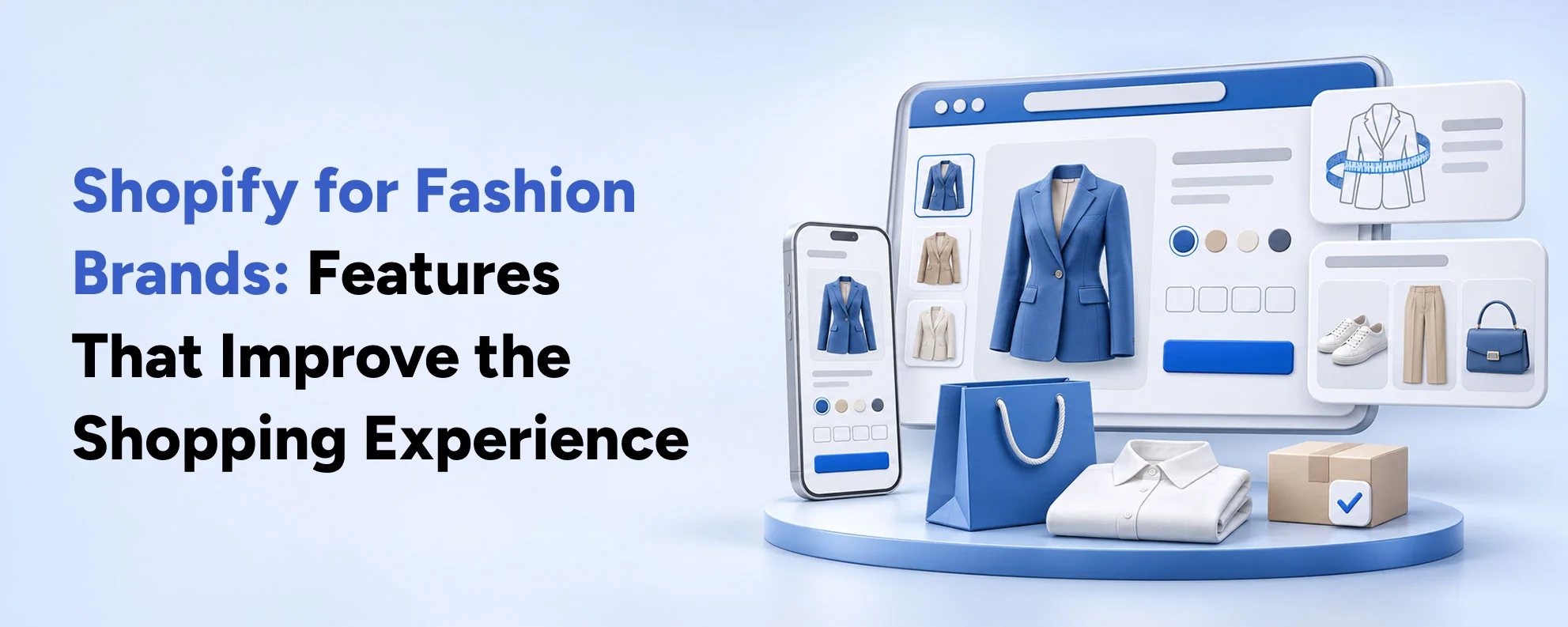
Fashion shopping has evolved beyond simply browsing products and placing orders. Today's customers expect an online shopping experience that feels as engaging, convenient, and personalized as visiting their favorite clothing store.
For growing apparel businesses, Shopify for fashion brands offers a flexible ecommerce platform that combines visually appealing storefronts, intelligent product discovery, secure checkout, and tools for selling internationally.
However, having a Shopify store alone does not guarantee a great customer experience.
Consider someone shopping for a new pair of jeans. They want to see the available colors, understand the fit, check their size, compare styles, and know when their order will arrive. If these details are difficult to find, even a beautiful website can lose a potential customer.
This is where the right Shopify features make a difference.
Whether you operate a luxury clothing label, an independent fashion boutique, a streetwear brand, or an international apparel business, Shopify can help you build a shopping experience that reduces uncertainty and makes purchasing easier.
In this guide, we explore 15 Shopify features that can improve the fashion shopping experience, explain how they work, and show how clothing brands can use them effectively.
Why Shopping Experience Matters for Fashion Ecommerce
Shopping for fashion online involves more uncertainty than purchasing many everyday products.
Customers cannot physically examine fabrics, try on garments, or immediately determine whether an item will fit comfortably.
Instead, they depend on the information and functionality available on an ecommerce website.
A successful fashion store must answer several questions:
- Will this clothing item fit me correctly?
- Does the actual color match the product photographs?
- What material is used, and how should I care for it?
- Can I find similar styles within my budget?
- Is my preferred size currently available?
- How much will shipping cost, and when will my order arrive?
- Can I return or exchange the product if necessary?
Addressing these questions helps remove friction from the buying journey.
The Cost of a Poor Shopping Experience
According to Baymard Institute's checkout usability research, the average documented ecommerce cart abandonment rate is approximately 70.19%.
This figure covers ecommerce generally rather than fashion exclusively. Nevertheless, it demonstrates how frequently potential purchases remain incomplete.
Sizing creates another major challenge.
A 2025 Shopify article on apparel size guides references a survey of 6,000 global consumers in which 61% reported returning apparel because it did not fit.
For fashion businesses, these findings reinforce the importance of clear product information, appropriate sizing guidance, and a convenient checkout process.
The goal is not simply to attract more website visitors. It is to help the right visitors find products they genuinely want and feel comfortable purchasing.
15 Shopify Features That Improve the Fashion Shopping Experience
Shopify provides a combination of native ecommerce capabilities, customizable themes, and third-party integrations.
The following features are particularly useful for fashion and apparel retailers.
1. Mobile-Friendly Fashion Store Design
Fashion discovery frequently begins on smartphones through social media, search engines, recommendations, and digital advertising.
A customer might discover a dress on Instagram, visit the brand's website, explore different colors, and complete the purchase without ever using a desktop computer.
Your store should make this entire journey convenient.
Shopify provides responsive themes that can adapt to different screen sizes. For example, its Dawn theme offers a clean layout that emphasizes product photography and visual merchandising.
Fashion retailers can customize compatible themes to include:
- Large, high-quality product photography.
- Simple mobile navigation.
- Clear collection categories.
- Convenient product selection controls.
- Accessible shopping cart functionality.
- Prominent product and checkout buttons.
However, mobile-friendly design requires more than choosing a responsive theme.
Heavy scripts, oversized images, intrusive popups, and unnecessary animations can still make a Shopify storefront frustrating.
How to Improve Mobile Shopping
Start by testing the complete buying journey on real mobile devices.
Check whether shoppers can quickly locate categories, select clothing sizes, view delivery information, and complete payment.
Use readable typography, adequate spacing between interactive elements, and appropriately sized product images.
For fashion brands, mobile usability should be considered throughout the design process rather than treated as a final adjustment.
2. Smart Product Search and Predictive Suggestions
Customers do not always browse a clothing store by navigating through menus.
Sometimes they know exactly what they want.
They may search for terms such as:
- Black oversized hoodie.
- Women's linen trousers.
- Summer wedding guest dress.
- Men's slim-fit jeans.
- Petite formal wear.
Shopify includes storefront search functionality with predictive search and typo tolerance. Its search experience can also interpret related terminology rather than relying entirely on exact keyword matches.
With Shopify Search & Discovery, merchants can further customize how shoppers find products.
For example, a customer searching for "formal shoes" may benefit from suggestions covering relevant footwear styles.
Similarly, product synonyms can help connect different regional terms, such as "sneakers" and "trainers."
How Fashion Brands Can Use This Feature
Use descriptive product titles and consistent product categories.
A title such as "Women's High-Rise Straight-Leg Jeans – Dark Blue" provides more useful product information than "Denim Style 204."
Review internal search queries to identify what shoppers are looking for.
If customers frequently search for "office wear," consider creating a dedicated collection with an appropriate range of products.
Better search relevance can improve product discovery while reducing unnecessary browsing.
3. Advanced Product Filters and Color Swatches
Imagine an online fashion store containing hundreds of dresses.
A customer looking for a black midi dress in size medium should not need to examine every item individually.
Product filters help shoppers narrow the available options.
Using Shopify Search & Discovery and a compatible theme, fashion brands can offer filters for:
- Clothing size.
- Color.
- Price range.
- Fabric or material.
- Product category.
- Availability.
- Fit or occasion, using structured product data.
Color swatches provide a visual representation of available shades or patterns.
Instead of reading a list containing "Black," "Navy," and "Olive," shoppers can recognize colors visually.
This is especially useful for clothing, footwear, and accessories where appearance plays a major role in the purchase decision.
Best Practices for Fashion Product Filters
Keep filtering options consistent across relevant collections.
For example, a jeans collection might include fit, rise, length, wash, size, and price.
A footwear collection might prioritize shoe size, color, heel height, and material.
Shopify's filtering system requires theme compatibility. Its documented limitations also mean collections containing more than 5,000 products do not display standard Search & Discovery filters.
Large fashion catalogs may therefore need more focused collections or specialized filtering solutions.
The objective is simple: help shoppers find relevant products with fewer unnecessary steps.
4. Size and Color Variants on Product Pages
Fashion products commonly come in multiple sizes, colors, lengths, and styles.
A single clothing item might be available in five sizes, four colors, and three inseam lengths.
Shopify's product variant functionality helps merchants organize these combinations within their product catalogs.
According to Shopify's current variant documentation, a product supports up to 2,048 variants and three product options, subject to relevant theme and integration compatibility.
For example, a denim product could use:
- Option 1: Color.
- Option 2: Waist size.
- Option 3: Inseam length.
Each variant can have its own inventory and pricing information.
Customers can select the combination that meets their requirements without navigating through multiple unrelated pages.
For larger brands, Shopify Plus also provides access to the Combined Listings app, which can group related products into a unified shopping experience while maintaining distinct underlying products.
Why This Matters
Well-organized variants make fashion catalogs easier to browse.
They also help reduce confusion between similar products.
A shopper should immediately understand which color, size, and style they have selected before adding an item to the cart.
5. Detailed Size Guides and Fit Recommendations
One of the most important improvements an apparel store can make is helping customers select the correct size.
Sizing differs between brands, countries, garment categories, and even individual product styles.
Someone who wears medium in one brand may need a large in another.
A generic size table is therefore not always enough.
Shopify supports custom product information through metafields, which merchants can use to display product-specific size guides with a compatible theme.
An effective fashion size guide should include:
- Body measurements.
- Garment measurements.
- Available size conversions.
- Fit descriptions.
- Model height and size worn.
- Fabric stretch information.
- Instructions for taking measurements.
For example, a dress page could explain that the garment has a fitted waist, relaxed skirt, and minimal stretch.
This helps customers understand how the product might feel when worn.
Advanced Fit Experiences
Fashion retailers can also integrate specialized size-recommendation applications.
Depending on the solution, these tools may use customer measurements, previous purchase information, or fit preferences to suggest an appropriate size.
Such recommendations should supplement accurate garment information rather than replace it.
For global brands, size charts should also accommodate relevant regional sizing conventions and measurement units.
An informative fit experience can increase customer confidence and may help reduce avoidable returns.
6. High-Quality Product Images, Videos, and Interactive Media
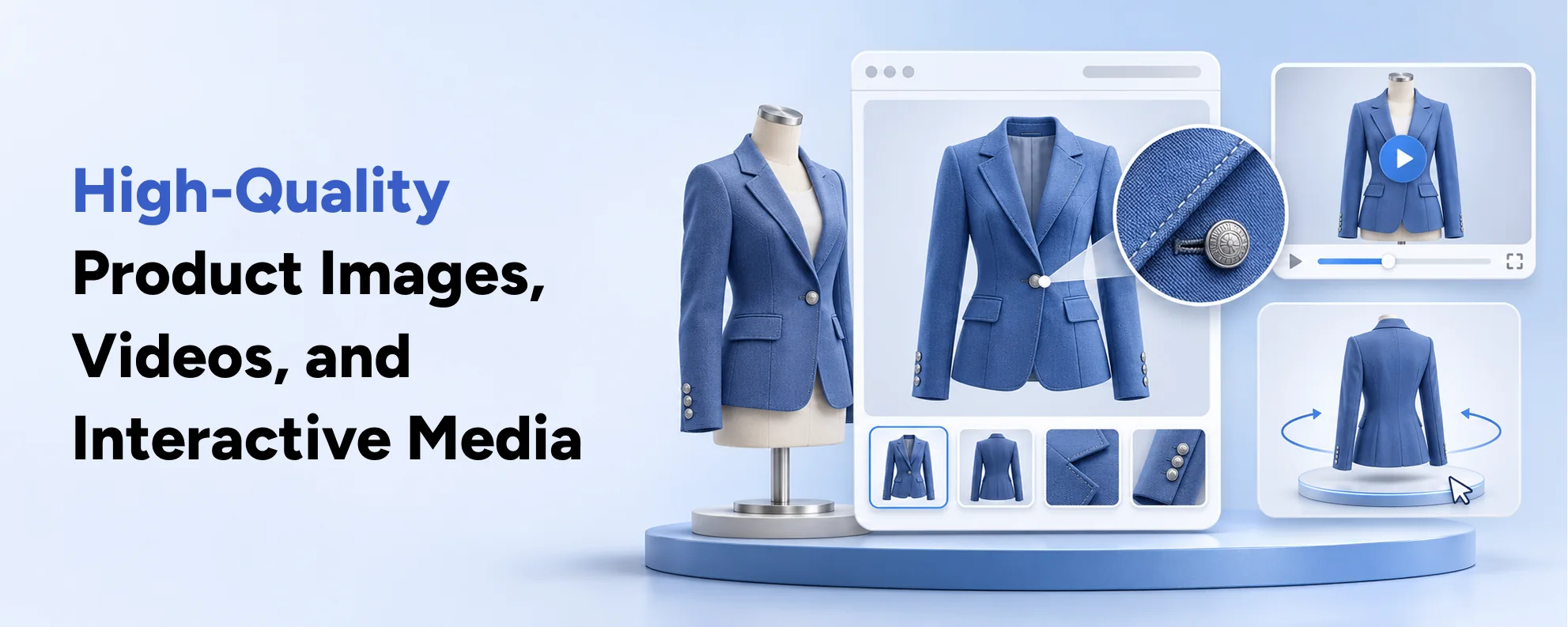
Visual presentation is central to fashion ecommerce.
Customers want to understand how an item looks, moves, fits, and coordinates with other clothing.
Shopify supports several product media formats, including images, videos, and 3D models, when the storefront theme supports them.
According to Shopify's product media documentation, these media types allow merchants to provide more detailed product demonstrations.
For clothing brands, effective product imagery might include:
- Front, back, and side views.
- Close-ups of fabric texture.
- Details of stitching and finishes.
- Garments displayed on models.
- Images showing different body types.
- Short videos demonstrating movement and fit.
- Lifestyle photography showing styling possibilities.
For example, a product video showing a flowing maxi dress in motion may communicate the fabric's drape more effectively than a static image.
Similarly, a close-up of denim can help customers distinguish between lightweight and heavyweight textures.
Should Fashion Brands Use 3D and AR?
Three-dimensional product experiences can be valuable for categories such as footwear, handbags, jewelry, and accessories.
However, displaying a garment in 3D does not automatically solve the challenge of predicting how it will fit a particular person.
For most apparel retailers, accurate photography, informative product videos, and reliable sizing information should come first.
Interactive media should improve product understanding rather than simply add visual complexity.
7. Custom Product Information Using Shopify Metafields
Clothing buyers increasingly want more information than a basic product description provides.
They may want to know where an item was made, whether the fabric stretches, how it should be washed, or which materials were used.
Shopify metafields allow merchants to store and display additional product information beyond standard fields.
Fashion-specific metafields might include:
- Fabric composition.
- Garment fit.
- Washing instructions.
- Country of origin.
- Model measurements.
- Product dimensions.
- Material certifications.
- Sustainability information supported by evidence.
For example, a premium cotton shirt could include a clearly organized product information section covering fabric weight, care instructions, fit, and construction.
These details make the product page more useful without requiring an excessively long description.
Improving the Product Page Layout
Group information into logical sections, such as Product Details, Size & Fit, Materials & Care, and Shipping & Returns.
Use expandable sections where appropriate, but do not hide information that shoppers need before purchasing.
Avoid vague sustainability claims. If a garment includes certified materials, display accurate information about the applicable certification.
Detailed and reliable product information can differentiate a fashion brand while helping customers make informed decisions.
8. Personalized Product Recommendations and Complete-the-Look Sections
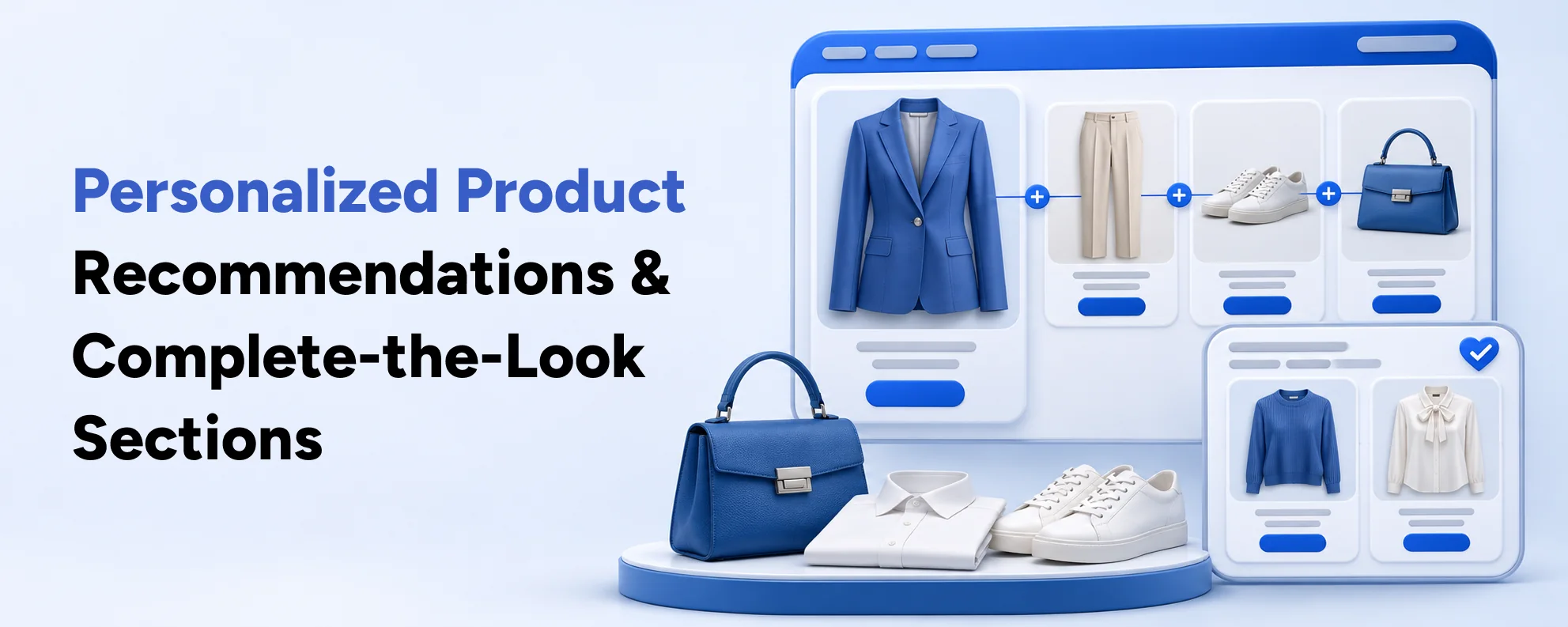
Fashion shopping often involves purchasing complementary items.
Someone selecting a blazer might also be interested in coordinating trousers, a shirt, or matching accessories.
Shopify can display related and complementary product recommendations through compatible storefront themes and its Search & Discovery app.
These recommendations serve two different purposes.
Related products provide alternatives similar to the item being viewed.
Complementary products suggest items that work well alongside the selected product.
For example:
A customer browsing a beige trench coat might see coordinated knitwear, trousers, and ankle boots.
A shopper considering formal footwear might receive suggestions for matching belts or accessories.
Creating an Effective Complete-the-Look Experience
Recommendations should be relevant to the customer's original shopping intention.
Avoid suggesting unrelated items merely because they are popular or expensive.
For fashion collections, consider recommending products based on:
- Similar styles.
- Coordinating colors.
- Seasonal relevance.
- Shared occasions.
- Compatible sizes.
- Available inventory.
A carefully curated recommendation section can improve product discovery and create opportunities for larger orders without making the website feel overly promotional.
9. Customer Reviews and User-Generated Content
Professional product photography shows how a fashion brand wants its clothing to appear.
Customer photographs and reviews provide another perspective: how real buyers experience those products.
Fashion shoppers often look for feedback about fit, comfort, fabric quality, and whether items match their descriptions.
Through compatible review applications and Shop-related review capabilities where available, Shopify merchants can collect and display customer feedback.
Useful review features include:
- Verified purchase indicators.
- Customer photographs.
- Written fit feedback.
- Product ratings.
- Review dates.
- Size-related observations.
For example, a review explaining that a jacket fits comfortably across the shoulders but runs slightly short may help another customer decide whether it meets their preferences.
Build Trust Through Authentic Feedback
Encourage customers to provide specific and useful feedback after delivery.
Display genuine reviews, including constructive criticism, instead of presenting only positive comments.
If customer photographs are featured in marketing materials, obtain appropriate permission.
Authentic feedback can improve credibility and help shoppers evaluate products more confidently.
10. Faster Checkout With Shop Pay and Express Payment Options
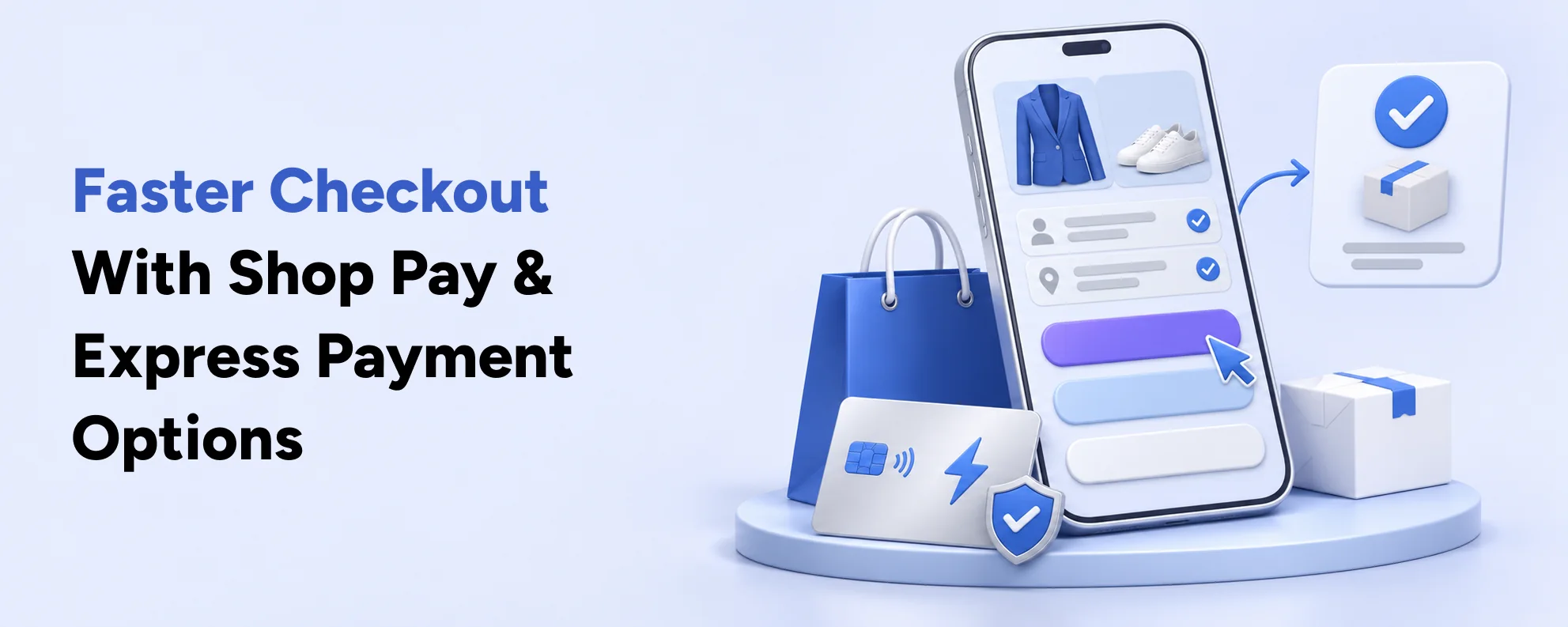
Customers who have selected their products should not face an unnecessarily complicated checkout.
Repeatedly entering contact details, completing long forms, and searching for payment options can create friction.
Shopify offers accelerated checkout methods, including Shop Pay where eligible, alongside supported payment-provider options.
Shop Pay allows participating customers to reuse saved contact, shipping, and payment information.
This can make purchasing more convenient, especially for returning shoppers.
However, Shop Pay availability depends on merchant eligibility and Shopify Payments support. Fashion brands operating from unsupported countries should evaluate the payment gateways available in their markets.
Other express payment options may include Apple Pay, Google Pay, and PayPal where supported.
Improving Checkout Beyond Payment Speed
Fashion retailers should also ensure customers understand:
- Shipping charges.
- Estimated delivery timelines.
- Return conditions.
- Available payment methods.
- Applicable taxes and import duties.
- Their selected product size and color.
An efficient checkout should be transparent as well as fast.
As Anna M. Peterson, product lead at Everlane, explained in a statement featured in Shopify's fashion conversion guide:
"With the Shop Pay experience, people are getting through checkout faster than with all of our other payment methods."
The broader lesson is that reducing unnecessary checkout steps can make an otherwise positive shopping experience easier to complete.
11. Inventory Visibility and Back-in-Stock Notifications
Few experiences are more disappointing than discovering that a preferred size is unavailable only after several shopping steps.
Shopify supports inventory tracking at the product variant level, allowing merchants to manage stock for individual combinations.
Fashion brands can use this information to improve product availability displays.
For example, a clothing store may show that a certain dress is available in small and medium but sold out in large.
Instead of leaving customers uncertain, the website can offer alternative sizes or similar products.
Back-in-stock notifications can also be implemented through compatible third-party applications or custom solutions.
Customers can then request updates when an item becomes available again.
Handling Fashion Inventory Effectively
Connect inventory information with all relevant fulfillment locations and selling channels.
Make sure products are not displayed as available when stock cannot be fulfilled.
Use low-stock messages only when they reflect accurate inventory data.
For limited collections, clearly explain whether products will be restocked.
Reliable availability information protects the customer experience and reduces disappointment.
12. International Selling With Shopify Markets
Fashion trends often cross national boundaries.
A clothing brand based in one country may attract customers from the United States, United Kingdom, Europe, Australia, the Middle East, or other international markets.
However, international customers do not necessarily want the same shopping experience.
They may prefer different currencies, languages, sizing conventions, payment methods, and delivery options.
Shopify Markets helps merchants tailor certain aspects of their store for different markets.
Depending on configuration, plan, and payment eligibility, businesses can manage localized experiences involving currency, language, catalogs, domains, and other market settings.
Example of International Localization
Consider a clothing brand selling to both American and European customers.
The brand could provide:
- Appropriate product pricing for each market.
- Localized storefront language.
- Relevant size conversions.
- Market-specific shipping information.
- Appropriate delivery and return policies.
Importantly, displaying prices in a currency is not the same as supporting payment settlement in that currency. Multi-currency payment processing depends on supported providers and configurations.
Shopify also provides localization and domain options that can support international SEO.
For growing fashion businesses, these capabilities help create more relevant experiences for customers in different countries.
13. Omnichannel Shopping and In-Store Pickup
Many fashion businesses operate both ecommerce websites and physical stores.
Customers may discover a product online but prefer to collect it from a nearby retail location.
Others might visit a boutique and later reorder their favorite clothing items online.
Shopify provides tools for connecting online and physical retail operations, including inventory management, Shopify POS, and pickup options.
Through supported configurations, shoppers can place an order online and select a retail location for collection.
This can be especially valuable when customers need clothing for an upcoming event and want to avoid uncertain shipping times.
Creating a Connected Retail Experience
A fashion retailer should aim for consistent product information across its online and physical channels.
Customers should be able to understand whether products are available, where they can collect orders, and what happens if an item needs to be exchanged.
An integrated omnichannel strategy can make shopping more convenient while supporting the operations of fashion retailers with multiple locations.
14. Simple Returns, Exchanges, and Customer Accounts
Even when a clothing store provides detailed product information, some purchases will not meet customer expectations.
A garment may fit differently than anticipated, or a customer may decide that another size is more appropriate.
An unnecessarily complicated returns process can damage the relationship between the customer and the brand.
Shopify supports returns management, exchanges, and customer account functionality.
Its self-serve returns and cancellations features allow merchants to configure eligible customers to submit requests through supported account and order interfaces.
For fashion retailers, this creates opportunities to make post-purchase support more convenient.
Features That Improve the Post-Purchase Experience
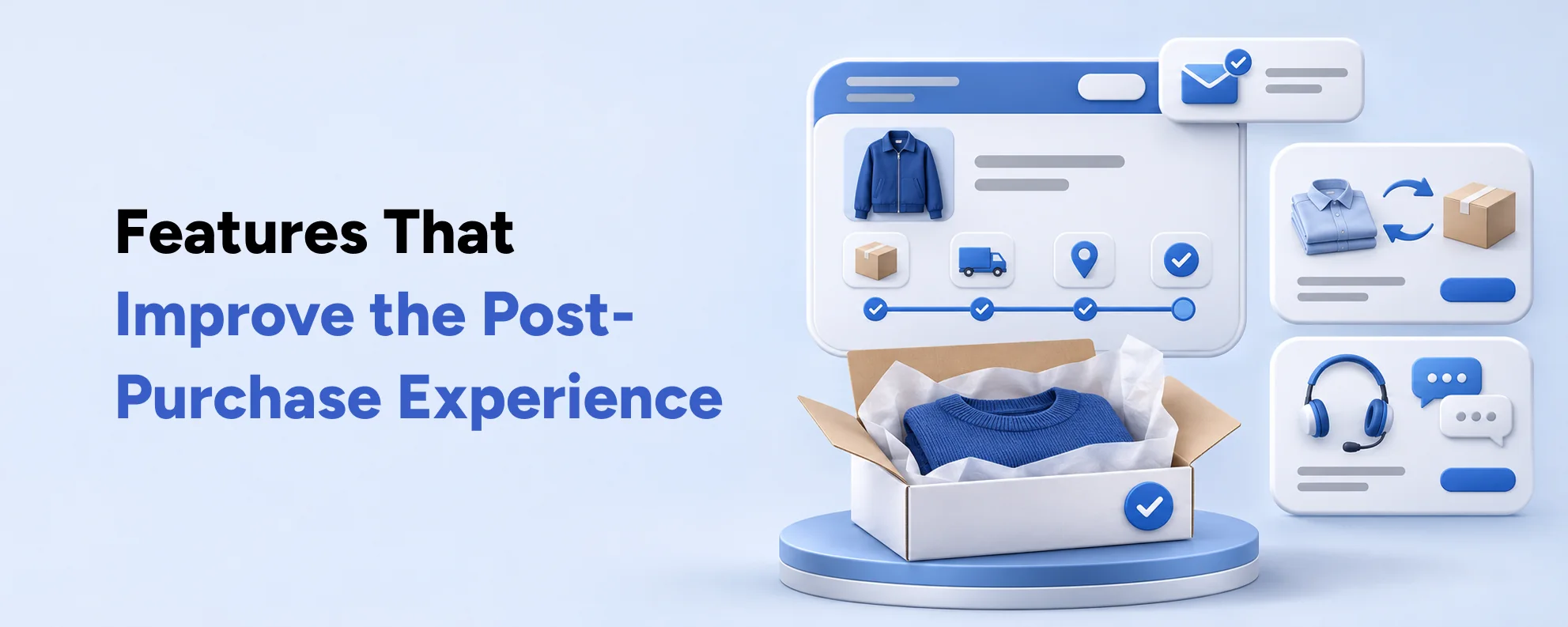
Provide a clear explanation of:
- Return eligibility.
- Applicable return windows.
- Refund methods.
- Return shipping responsibilities.
- Exchange procedures.
- Final-sale restrictions.
Where supported, allow shoppers to request a different size or color rather than making every change a completely separate purchase.
Customer accounts can also make it easier to access order information and reorder products.
A transparent returns experience can help customers evaluate a brand's service before placing their first order.
15. Personalized Marketing and Customer Retention
The shopping experience should continue after the first purchase.
Returning customers may appreciate recommendations based on their interests, reminders about relevant collections, or early access to products they genuinely want.
Shopify supports customer segmentation and integrates with marketing tools for email campaigns, customer communication, and retention programs.
For example, a clothing brand could create segments for customers interested in:
- Women's casual wear.
- Premium denim.
- Sportswear.
- New seasonal collections.
- Returning customers.
- Specific geographic markets.
Relevant communications can help customers discover products without requiring them to repeatedly search through the complete catalog.
Avoid Overpersonalization
Personalization should be helpful rather than intrusive.
Respect customer consent, regional privacy requirements, and communication preferences.
A shopper who previously purchased a winter coat does not necessarily want repeated promotions for coats.
Use meaningful product relationships, seasonal relevance, and observed customer engagement rather than sending excessive messages.
The objective is to strengthen the relationship with customers, not simply increase the number of marketing emails.
Comparison of Essential Shopify Fashion Features
Not every shopping feature requires the same implementation approach.
Some are available directly through Shopify. Others depend on a suitable theme, application, subscription plan, or custom development.
| Feature | Customer Benefit | Typical Implementation |
|---|---|---|
| Responsive store design | Easier mobile browsing | Shopify theme and customization |
| Predictive product search | Faster product discovery | Shopify search and compatible storefront |
| Size and color filters | More relevant product results | Search & Discovery with compatible theme |
| Product variants | Convenient size and color selection | Native Shopify functionality |
| Size charts | Greater fit confidence | Metafields, theme customization, or app |
| Product videos | Better product understanding | Shopify product media and supported theme |
| Complete-the-look suggestions | Easier outfit discovery | Search & Discovery and theme sections |
| Customer reviews | Better purchasing confidence | Compatible reviews integration |
| Express checkout | Fewer checkout steps | Eligible payment providers |
| Back-in-stock alerts | Updates on unavailable items | App or custom integration |
| Localized shopping | Relevant international experiences | Shopify Markets and supported configurations |
| In-store pickup | More convenient order collection | Shopify fulfillment settings and retail locations |
| Self-serve returns | Easier post-purchase support | Shopify returns and customer accounts |
| Personalized marketing | More relevant customer communication | Segmentation and marketing integrations |
| Advanced fashion functionality | Specialized brand experiences | Custom Shopify development |
The best combination depends on the brand's catalog size, customer behavior, business model, and available budget.
How to Build a Better Shopify Fashion Store
Knowing which features exist is only the first step.
Fashion brands need to organize those capabilities around the actual customer journey.
Step 1: Understand How Customers Shop
Review your audience and product categories.
A luxury handbag retailer may need detailed photography, material information, and personalized assistance.
A fast-fashion brand may prioritize product discovery, mobile navigation, seasonal collections, and efficient inventory management.
Identify the most important customer questions before making design decisions.
Step 2: Organize Product Collections Around Shopping Intent
Create intuitive categories that reflect how people naturally search for clothing.
For example:
- New Arrivals.
- Dresses.
- Tops.
- Denim.
- Outerwear.
- Occasion Wear.
- Accessories.
- Sale.
Use appropriate subcategories when they genuinely help shoppers.
Avoid creating numerous overlapping collections that make navigation confusing.
Step 3: Improve Product Pages Before Adding More Apps
Start by ensuring that every important product page includes accurate photography, descriptions, sizing information, prices, inventory, and delivery details.
If customers cannot determine whether a product suits them, adding more promotional features is unlikely to solve the underlying problem.
Step 4: Prioritize Mobile Performance
Test representative product and collection pages using Google PageSpeed Insights.
Pay particular attention to large product images, excessive third-party scripts, slow interactions, and layout shifts.
Evaluate page performance using real-user data when available.
Step 5: Add Relevant Product Discovery Features
Implement filters based on the specific attributes shoppers use to compare your products.
For example, denim shoppers may prioritize waist, rise, inseam, and fit, while occasionwear shoppers may care more about silhouette, color, size, and event type.
Avoid introducing filters that contain inconsistent or incomplete data.
Step 6: Simplify Checkout and Delivery Information
Review the shopping cart and checkout experience.
Make sure customers can confirm their selected sizes and colors, understand order costs, and choose available payment methods.
Where appropriate, offer supported express checkout options.
Step 7: Test and Improve Continuously
Use customer behavior, conversion data, and support feedback to identify opportunities.
For example, if a particular product receives strong traffic but few purchases, investigate whether the issue involves pricing, product information, fit uncertainty, availability, or another factor.
Test changes rather than assuming that a visually attractive design will automatically improve sales.
Real-World Fashion Ecommerce Examples
The following examples illustrate how Shopify capabilities can support different fashion business requirements.
Example 1: Libas and Direct-to-Consumer Fashion Growth
Libas is an established Indian fashion retailer that expanded its direct-to-consumer operations using Shopify.
According to Shopify's Libas case study, the business grew its DTC operation to more than ₹300 crore in annual revenue while investing in technology, mobile commerce, customer insights, and operational improvements.
The case study describes how Shopify supported faster merchandising updates, ecommerce integrations, checkout improvements, and connected customer data.
The results should not be attributed to a single Shopify feature. Instead, they demonstrate the importance of combining technology with merchandising, marketing, and business operations.
For other fashion retailers, the relevant lesson is that a flexible ecommerce infrastructure can support changing customer expectations as a business grows.
Example 2: A Premium Denim Brand Improving Product Discovery
Consider a hypothetical premium denim business selling jeans in different fits, washes, and lengths.
Its biggest customer challenges are locating appropriate products and selecting the correct size.
The brand could improve its Shopify store by introducing filters for waist size, inseam, rise, fit, and wash.
It could also add detailed garment measurements, product videos, and customer reviews containing fit feedback.
Rather than requiring customers to inspect every pair of jeans, the store would guide them toward suitable options.
The brand could measure the impact by tracking filter usage, product-page engagement, conversion rate, and size-related return reasons.
This is an illustrative scenario, not a claim of measured results from an actual client.
Example 3: A Boutique Creating a Complete-the-Look Experience
Imagine a boutique selling dresses, bags, shoes, and jewelry.
Its customers often shop for particular events, including weddings, holidays, and formal occasions.
The boutique could organize products into occasion-based collections.
On a dress product page, it could display matching footwear and accessories, provide delivery estimates, and offer a size guide.
This would help customers assemble an outfit without searching through multiple unrelated categories.
The business could then evaluate whether these improvements increase relevant product engagement, additional items purchased, and customer satisfaction.
Shopify SEO Strategies for Global Fashion Brands
An excellent shopping experience matters most when the right customers can discover the store.
For international clothing brands, search engine optimization should connect product discovery, useful content, technical accessibility, and regional relevance.
1. Target Relevant Fashion Search Keywords
Instead of optimizing every page for broad phrases such as "fashion" or "clothing," focus on specific search intentions.
A fashion retailer might target categories such as women's linen dresses, men's oversized T-shirts, or sustainable denim jackets.
Collection pages should focus on shopping-related keywords, while editorial content can address questions about fit, styling, fabrics, and garment care.
2. Create Useful Product and Collection Descriptions
Write original descriptions that explain the characteristics of the clothing.
Include relevant information about materials, construction, fit, appearance, and use.
Avoid copying manufacturer descriptions across multiple products.
Well-structured collections can also help customers and search engines understand the relationship between categories and products.
3. Optimize Product Images
Use descriptive filenames and meaningful alternative text.
For example, alternative text describing a navy linen midi dress with short sleeves is more informative than a generic image label.
Compress images appropriately without sacrificing details that customers need to evaluate the product.
4. Implement Appropriate Product Structured Data
Google supports Product and merchant listing structured data that can help search systems interpret ecommerce information.
According to Google Search Central's Product structured data guidance, relevant information can include price, availability, product variants, shipping details, and return policies.
Fashion stores should maintain accurate product information and consider the appropriate markup for sizes, colors, and variants.
Structured data may make eligible products easier to understand and eligible for enhanced search appearances, but it does not guarantee rankings or rich results.
5. Optimize International Storefronts
Global fashion brands should consider regional language, currency, and search behavior.
For example, people may search for "jumpers" in the United Kingdom and "sweaters" in the United States.
A localized strategy should reflect these differences naturally.
Shopify supports international URL and language configurations through its Markets functionality.
Use suitable regional URLs, correct hreflang implementation, and genuinely localized content where relevant.
6. Build Supporting Fashion Content
A fashion brand can support its commercial pages with helpful educational articles.
Examples include:
- How to Choose the Right Jeans for Your Body Shape.
- Linen vs. Cotton: Which Fabric Is Better for Summer?
- How to Measure Yourself for Online Clothing Shopping.
- Essential Wardrobe Pieces for Different Seasons.
- How to Care for Premium Knitwear.
These articles should answer real customer questions and link naturally to relevant collections or products.
If your business provides Shopify development services, editorial content can instead address merchant problems, such as improving apparel size selection, reducing cart abandonment, or choosing fashion ecommerce features.
For brands requiring specialized implementation, Basil Tech Solutions offers a starting point for exploring professional Shopify development support.
How to Measure Shopping Experience Improvements
Fashion ecommerce improvements should be evaluated using meaningful performance indicators.
A visually appealing store is valuable, but customer behavior provides stronger evidence of whether its features work.
| Metric | What It Measures | Why It Matters |
|---|---|---|
| Conversion rate | Percentage of sessions resulting in orders | Helps assess purchasing effectiveness |
| Add-to-cart rate | Percentage of sessions that add products | Indicates product interest |
| Checkout completion rate | Percentage of checkout starts completing an order | Highlights purchase friction |
| Average order value | Average revenue per order | Helps assess basket composition |
| Product search usage | How customers use storefront search | Identifies shopping intent |
| Size-related return rate | Returns associated with fit problems | Evaluates sizing guidance |
| Repeat purchase rate | Customers purchasing again | Indicates retention |
| Core Web Vitals | Loading, responsiveness, and layout stability | Measures important aspects of page experience |
Do not interpret these metrics in isolation.
For example, a store might increase average order value while also experiencing more returns.
Similarly, an increase in conversion rate may come from a pricing promotion rather than an improvement in usability.
Compare relevant customer segments, product categories, and time periods.
A useful optimization process begins with a measurable problem, introduces a targeted improvement, and evaluates whether the change produced the intended outcome.
Common Mistakes Fashion Brands Should Avoid
Shopify offers considerable flexibility, but unnecessary complexity can make a fashion store harder to use.
Using Too Many Applications
Installing multiple apps that perform similar functions can create conflicts, increase costs, and add unnecessary scripts.
Evaluate whether a feature can be implemented through existing Shopify functionality before introducing another integration.
Prioritizing Appearance Over Usability
Large animations and elaborate visual effects may look impressive, but they should not interfere with product selection, navigation, or page performance.
Providing Generic Size Charts
A single size chart may not accurately describe every clothing category.
Use product-specific measurements wherever fit characteristics differ significantly.
Hiding Delivery and Return Information
Customers should not have to search extensively to understand shipping costs or return eligibility.
Make important policies accessible before checkout.
Ignoring International Shopping Differences
A fashion store serving multiple countries should review currency, sizing, shipping, language, tax, and customer support requirements.
Simply allowing international orders does not necessarily create a localized shopping experience.
Neglecting Accessibility
Make sure customers can navigate important shopping functionality using a keyboard, understand product options without relying only on color, and read text with sufficient contrast.
Accessible design helps create a more usable store for a wider range of customers.
Frequently Asked Questions
Is Shopify a good platform for fashion brands?
Yes. Shopify is suitable for many fashion businesses because it supports customizable storefronts, product variants, inventory management, product media, and ecommerce integrations. It can serve independent boutiques, emerging apparel labels, and larger retailers. The best setup depends on catalog complexity, business requirements, budget, and the level of customization needed.
What are the most important Shopify features for a clothing store?
The most useful features typically include mobile-friendly design, size guides, color swatches, product filters, high-quality images, inventory visibility, secure checkout, and clear returns information. These features address common challenges customers face when purchasing clothing online.
Can Shopify handle different clothing sizes and colors?
Yes. Shopify supports product variants for attributes such as size, color, and length. A product can have up to three options and 2,048 variants under the documented platform limits. Theme and app compatibility should be checked, especially for larger variant configurations.
Can customers use size guides on Shopify?
Yes. Fashion retailers can implement size guides through Shopify metafields, compatible theme functionality, custom development, or specialized applications. Effective size guides explain body measurements, garment dimensions, fit characteristics, and regional size differences.
Does Shopify support international fashion ecommerce?
Yes. Shopify Markets supports various international selling and localization features, including regional pricing, language configurations, and market-specific experiences. Some capabilities depend on the merchant's subscription plan, payment provider, country, and technical setup.
How can Shopify improve fashion store conversion rates?
Shopify can support conversion optimization through easier product discovery, detailed size information, relevant recommendations, streamlined checkout, and transparent shipping and returns details. However, conversion improvements depend on customer needs, implementation quality, pricing, traffic sources, and continuous testing.
Can Shopify reduce clothing returns?
Shopify cannot eliminate returns, but merchants can use detailed product information, accurate size guides, fit descriptions, authentic reviews, and clear photographs to help customers make more informed decisions. These improvements may reduce avoidable returns caused by incorrect expectations.
Does Shopify support virtual try-on for fashion products?
Virtual try-on experiences may be implemented through specialized third-party technologies or custom integrations, depending on the product category and available solution. Shopify also supports product media such as 3D models through compatible themes. However, 3D viewing and virtual try-on are different capabilities and should not be treated as interchangeable.
What is the best Shopify theme for a fashion brand?
The best theme depends on the brand's visual identity, catalog complexity, customer journey, and required features. Shopify's Dawn theme can be a starting point for image-focused storefronts, while other premium themes may offer additional merchandising functionality. Evaluate mobile performance, filtering, media support, accessibility, and customization requirements before choosing.
Do fashion brands need custom Shopify development?
Not every fashion business needs custom development. Many essential features are available through Shopify and compatible themes. Custom development becomes useful when a brand requires specialized merchandising, complex integrations, unique design functionality, advanced product configuration, or shopping experiences that standard solutions cannot adequately support.